

Smile bonding and veneers – they both fix your smile, but in totally different ways. Whether you have a chipped tooth or need a brighter smile, these are the most commonly suggested options by dentists. Here is some basic information on dental bonding vs veneers – which one to choose in which condition.
What Is Dental Bonding and How Does It Work?
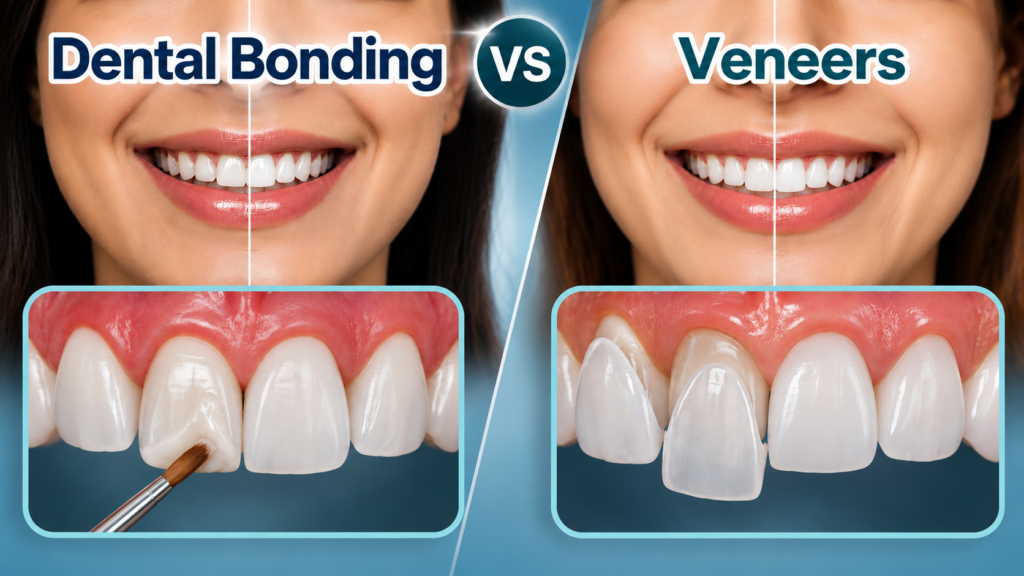
Dental bonding is a dental procedure that uses a tooth-colored resin. It is used to fix chips, gaps, or stains on the teeth. The resin can be shaped as required to fix right on your tooth. The dentist will harden it with a light.
Why do people like bonding:
- Fast – It can be done in one visit.
- No enamel removal – It goes right on top of your tooth without removing the enamel.
- Cheap – It is an affordable fix for chipped or stained teeth.
- Great for small jobs – Small chips and gaps can be easily fixed using bonding.
Dr. Georgia Haddad often suggests bonding to patients who want to cover an old stain or a chipped tooth. It is quick and low-cost. And it doesn’t affect your natural tooth enamel.
What Are Veneers and How Are They Different from Bonding?
Veneers are thin shells usually made from porcelain. They cover the front surface of your teeth. While bonding is applied directly, veneers need some preparation work first.
A quick look at porcelain veneers vs composite bonding:
- Material – Veneers are shells, while bonding is a type of resin applied right on the tooth.
- Preparation – Veneers require a thin layer of enamel removed, while bonding doesn’t need any preparation.
- Visits – Veneers take two or more visits, while bonding can be done over one visit to the dentist.
- Look – Among both options, veneers are believed to look closer to natural teeth.
For those who want a full smile makeover, veneers are suggested. For those who need a quick fix for their dental issue, bonding is preferable.
Cost Comparison: Dental Bonding vs. Veneers
Dental treatments, especially cosmetic surgeries, are expensive. When you have to get a dental treatment, cost is an important factor to consider.
Here’s the basic cosmetic tooth bonding cost vs veneers:
- Bonding – It ranges from $100 to $400 per tooth.
- Composite veneers – $250 to $1,500 per tooth.
- Porcelain veneers – $900 to $2,500 per tooth.
Bonding is an economical option upfront. Veneers are an expensive treatment, but they last longer and resist stains better. Beach Cities Dental Group can break down pricing for you. We suggest the best treatment according to your teeth’s condition. You will be provided with the complete breakdown of prices – no surprises, no guesswork.
Which Lasts Longer: Bonding or Veneers?
Your teeth need regular care. Following a dental treatment, your teeth require good care to last longer. However, every dental treatment has a period of service, after which it needs replacement or retouching. Bonding can last from 3 to 10 years if good dental care is practised. For veneers, this period is ten to twenty years. The porcelain version lasts the longest. Bonding needs more protection against stains, as it can stain more easily. Veneers stay brighter for years. Bonding is easy to touch up. Whenever retouching is required, it can be performed by the dentist over a sitting. Veneers usually need a full replacement when they get stained. So, if you want something that lasts longer, veneers are recommended. However, if you are looking for an easy fix for your dental issue, pick bonding.
Which Cosmetic Treatment Is Right for Your Smile?
In modern dentistry, there are many fixes available for a single dental treatment. But these can be compared depending on their performance, cost, care and replacement requirements. It comes down to your specific requirements and budget. And how much time you want to spend on the treatment.
Bonding is right for you when:
- You need a chipped tooth or a gap fixed.
- You are looking for a faster and cheaper option.
- You aren’t ready for a bigger commitment.
Veneers might be right if:
- You are looking for a full smile makeover.
- You have a few cosmetic dental issues to fix.
- You want something that lasts longer and resists stains.
Conclusion:
So if you are looking for smile bonding Ventura options in Oxnard, CA, book a quick consultation with Beach Cities Dental Group. We have been offering world class dental treatments in the area for years. After a personalized examination, patients are suggested the right treatments to match their requirements and expectations.
We also provide same-day dental treatment options and sedation dentistry to patients who feel anxious during dental treatments. If you are still unsure about the treatment, visit us today to discuss your dental condition with one of our cosmetic dentists. You will be assigned the best cosmetic dentist for veneers and bonding to make it simple. Dr. Georgia Haddad and the team at Beach Cities Dental Group will recommend the best solution for your dental issues and smile enhancement.
Frequently Asked Questions
1. Is bonding cheaper than veneers?
Bonding usually costs less per tooth than both veneers. However, veneers last longer. Depending on the condition of your teeth, the cost can be adjusted. If you are on a budget, pick bonding.
2. How long does dental bonding last compared to veneers?
With the right care, bonding can last up to ten years. Veneers are a more long-lasting treatment, which can last up to twenty years, especially porcelain veneers. Veneers generally hold up longer with proper care.
3. Does bonding or veneers require removing tooth enamel?
Veneers need a thin layer of enamel to be removed before placement. This helps fit the shell properly. Bonding doesn’t require any such preparation. It sits on the tooth directly.
4. Can bonding fix the same issues as veneers?
Bonding is recommended for patients with small chips, gaps or minor discoloration in teeth. Veneers are better suited for bigger cosmetic issues.
5. Which option is better for a single chipped tooth?
Bonding is the better choice for one chipped tooth. It is a quick fix. It is more affordable and can be completed over a single visit.