
Medically Reviewed by Dr. Georgia Haddad
Missing most or all of your teeth can affect much more than your appearance. It can make eating difficult, impact your speech, reduce your confidence, and even contribute to jawbone deterioration over time. Fortunately, full mouth dental implants provide a long-lasting solution that restores both function and aesthetics.
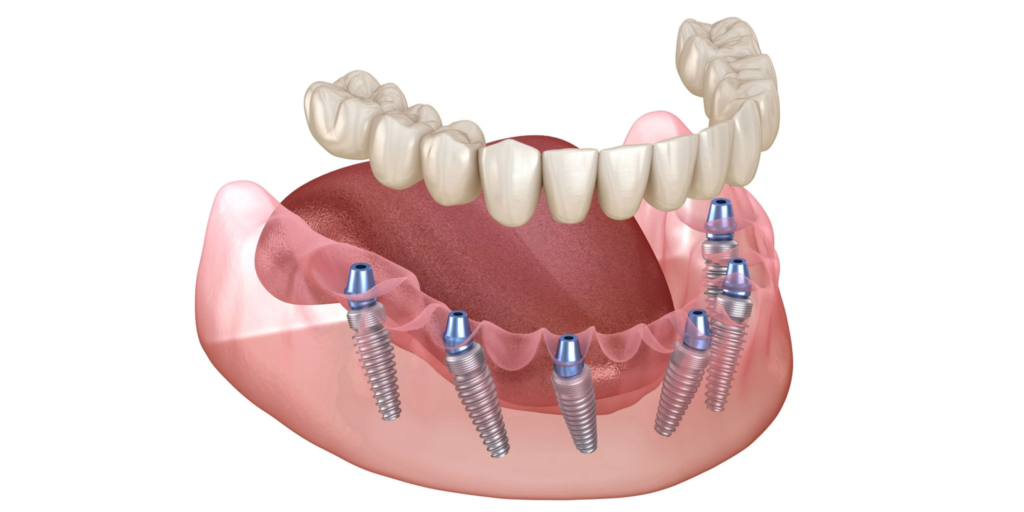
Unlike removable dentures, dental implants are anchored directly into the jawbone, creating a stable foundation for a complete set of replacement teeth. Modern techniques such as full arch dental implants and all on 4 dental implants allow patients to regain a beautiful smile with fewer implants while preserving jawbone health.
At Beach Cities Dental Group, Dr. Georgia Haddad helps patients understand every stage of implant treatment so they can make informed decisions about restoring their oral health. Whether you have recently lost your teeth or have struggled with traditional dentures for years, this guide explains everything you need to know about full mouth teeth replacement.
What Are Full Mouth Dental Implants?
Full mouth dental implants are a permanent tooth replacement solution designed for patients who have lost all or nearly all of their teeth in one or both arches.
Instead of replacing every missing tooth with an individual implant, dentists strategically place four to six titanium implants into the jawbone. These implants act as artificial tooth roots and support an entire arch of prosthetic teeth.
This treatment is commonly known as full arch dental implants, and one of the most popular methods is all on 4 dental implants, where four precisely positioned implants support an entire upper or lower arch. Depending on your bone density and treatment goals, your dentist may recommend five or six implants for additional stability.
Once placed, the implants gradually fuse with the surrounding bone through a natural process called osseointegration. This creates an exceptionally strong foundation that feels and functions much like natural teeth.
The replacement teeth are custom-designed to match your facial features, bite, and smile. Modern materials such as zirconia or high-quality acrylic provide a natural appearance while offering excellent durability.
Patients often choose this treatment because it offers:
- A permanent solution for missing teeth
- Improved chewing efficiency
- Better speech clarity
- Natural-looking aesthetics
- Increased comfort compared to removable dentures
- Long-term preservation of jawbone structure
For many people, full mouth teeth replacement is not just about replacing teeth—it is about restoring quality of life.
Full Mouth Implants vs. Traditional Dentures
One of the biggest questions patients ask is whether implants are truly better than dentures. While both options replace missing teeth, they function very differently.
Traditional dentures sit on top of the gums and rely on suction or adhesives to remain in place. Over time, changes in the jawbone can cause dentures to become loose, making eating and speaking increasingly difficult.
By comparison, full mouth dental implants are securely anchored into the jawbone, eliminating movement during daily activities.
Here are the major differences:
| Feature | Full Mouth Dental Implants | Traditional Dentures |
| Stability | Fixed in place | May shift or slip |
| Chewing Strength | Nearly like natural teeth | Reduced biting force |
| Jawbone Health | Helps preserve bone | Bone continues shrinking |
| Comfort | Feels natural | Can cause sore spots |
| Maintenance | Brush like natural teeth | Remove for cleaning |
| Longevity | Can last decades | Usually replaced every several years |
One of the most significant advantages of implants is jawbone preservation.
When teeth are lost, the jawbone no longer receives stimulation from tooth roots, causing gradual bone loss. Implant posts stimulate the bone during chewing, helping maintain facial structure and reducing the sunken appearance often associated with long-term denture wear.
Patients who switch from dentures to full arch dental implants frequently report:
- Greater confidence while smiling
- Easier eating
- Improved speech
- Better comfort throughout the day
- No need for denture adhesives
Although dentures remain a suitable option for some individuals, implants offer a more permanent and natural-feeling solution.
The Step-by-Step Procedure: What to Expect
Many patients feel nervous before implant treatment because they are unsure what the dental implants full mouth procedure involves. Understanding each stage helps reduce anxiety and prepares you for a successful experience.
Initial Consultation
Your journey begins with a comprehensive dental examination.
Your dentist will evaluate:
- Oral health
- Gum condition
- Existing teeth
- Jawbone density
- Medical history
Advanced digital X-rays and 3D CBCT imaging help create a personalized treatment plan.
Treatment Planning
Using digital technology, your dentist carefully determines implant placement for maximum stability while avoiding important anatomical structures.
If bone loss is present, additional procedures such as bone grafting or sinus augmentation may be recommended before implant placement.
Implant Surgery
During surgery, the titanium implants are placed into the jawbone under local anesthesia or sedation.
Many patients are surprised to learn that the procedure is often less uncomfortable than expected.
For eligible patients, temporary teeth may be attached the same day, allowing you to leave the office with a functional smile.
Healing Phase
Over the next several months, the implants naturally fuse with the jawbone through osseointegration.
This biological process creates exceptional stability.
Final Restoration
Once healing is complete, custom-designed permanent teeth are attached to the implants.
These restorations are carefully adjusted to ensure proper bite alignment, comfort, and a natural appearance.
At Beach Cities Dental Group, Dr. Georgia Haddad carefully monitors every stage of treatment to ensure optimal healing and long-term success.
Recovery Time and Aftercare Tips
One of the most searched questions online is about full mouth dental implants recovery time.
Recovery occurs in several stages, with each phase playing an important role in long-term success.
First Few Days
Immediately after surgery, mild swelling, bruising, and tenderness are completely normal.
Your dentist may recommend:
- Cold compresses
- Prescribed medication
- Soft foods
- Plenty of rest
First One to Two Weeks
During the first couple of weeks, the gums begin healing around the implants.
Most patients can return to work within a few days, depending on the complexity of the procedure.
Soft foods such as yogurt, eggs, mashed potatoes, smoothies, oatmeal, soup, and pasta are generally recommended during this stage.
Three to Six Months
The implants continue bonding with the jawbone throughout the next three to six months.
Although your temporary teeth allow normal daily activities, avoiding extremely hard foods helps protect the healing implants.
To promote successful healing:
- Brush gently twice daily
- Use antimicrobial mouth rinse if recommended
- Avoid smoking or tobacco products
- Attend all follow-up appointments
- Maintain excellent oral hygiene
- Follow your dentist’s dietary instructions
Following these recommendations significantly improves implant success rates and long-term stability.
How Much Do Full Mouth Dental Implants Cost?
Many patients researching how much do full mouth dental implants cost quickly discover there is no universal price.
The overall investment varies because every patient’s treatment plan is unique.
Several factors influence the total cost, including:
- Number of implants required
- Upper arch, lower arch, or both
- Type of restoration material
- Zirconia versus acrylic prosthetics
- Need for bone grafting
- Tooth extractions
- Sedation options
- Complexity of the case
- Geographic location
- Dentist’s experience
Although implants require a higher initial investment than dentures, they often provide greater long-term value because of their durability and reduced maintenance.
When evaluating permanent dentures vs implants, it is important to consider more than upfront cost. Implant-supported restorations typically offer better comfort, improved chewing ability, greater confidence, and long-lasting results that can reduce future replacement expenses.
During your consultation, your dentist will create a customized treatment plan based on your oral health and discuss financing options that fit your budget.
Choosing an experienced implant provider is one of the most important investments you can make for predictable, long-lasting results.
Why Choose Beach Cities Dental Group for Full Mouth Dental Implants?
Choosing the right dental team can make a significant difference in your implant experience.
At Beach Cities Dental Group, Dr. Georgia Haddad combines advanced digital technology with personalized treatment planning to help patients achieve healthy, functional, and natural-looking smiles.
From your initial consultation through your final restoration, every step focuses on comfort, precision, and long-term success. Whether you are considering all on 4 dental implants or another full mouth teeth replacement solution, you will receive a treatment plan tailored to your individual needs and goals.
Restore Your Smile with Confidence
Living with missing teeth does not have to be permanent. Today’s full mouth dental implants provide a reliable, natural-looking solution that restores confidence, chewing ability, and overall oral health.
If you are ready to replace missing teeth with a stable, long-lasting smile, schedule a consultation with Beach Cities Dental Group. Dr. Georgia Haddad can evaluate your oral health, discuss your options, and help determine whether full arch dental implants are the right choice for you. Your journey toward a healthier, more confident smile can begin with a personalized treatment plan.
Frequently Asked Questions
How long do full mouth dental implants last?
With proper brushing, flossing, and routine dental checkups, the implant posts can last a lifetime. The custom bridge or prosthetic teeth may require maintenance or replacement after approximately 10 to 15 years due to normal wear.
Is the full mouth dental implant surgery painful?
No. The procedure is performed under local anesthesia or sedation, so you should not feel pain during surgery. Mild soreness and swelling afterward are common and can usually be managed with prescribed or over-the-counter pain medication.
How many teeth are in a full mouth dental implant arch?
A full-arch restoration typically includes 12 to 14 custom-designed prosthetic teeth, providing a complete, balanced smile that closely resembles natural teeth in both appearance and function.
Can you get full mouth dental implants if you have bone loss?
Yes. Many patients with bone loss remain good candidates for implants. Depending on your condition, your dentist may recommend bone grafting, sinus lifts, or specialized techniques like all on 4 dental implants, which use angled implants to maximize available bone.
How do you clean and maintain full mouth implants?
Maintain your implants by brushing twice daily with a soft-bristled toothbrush, using a water flosser or implant-specific floss to clean beneath the bridge, and visiting your dentist regularly for professional cleanings and routine examinations. Consistent oral hygiene is essential for protecting your investment and ensuring long-term implant success.