

When replacing missing teeth, one of the first questions patients often have is about dental implants and dentures cost. However, there is no single price that applies to everyone. The overall treatment investment depends on the type of restoration, number of missing teeth, condition of the jawbone, materials used, and whether additional procedures are needed.
At Beach Cities Dental Group, we believe patients should understand their treatment options before making a decision. Dr. Georgia Haddad can evaluate your oral health, discuss your goals, and explain which tooth replacement approach may best suit your needs.
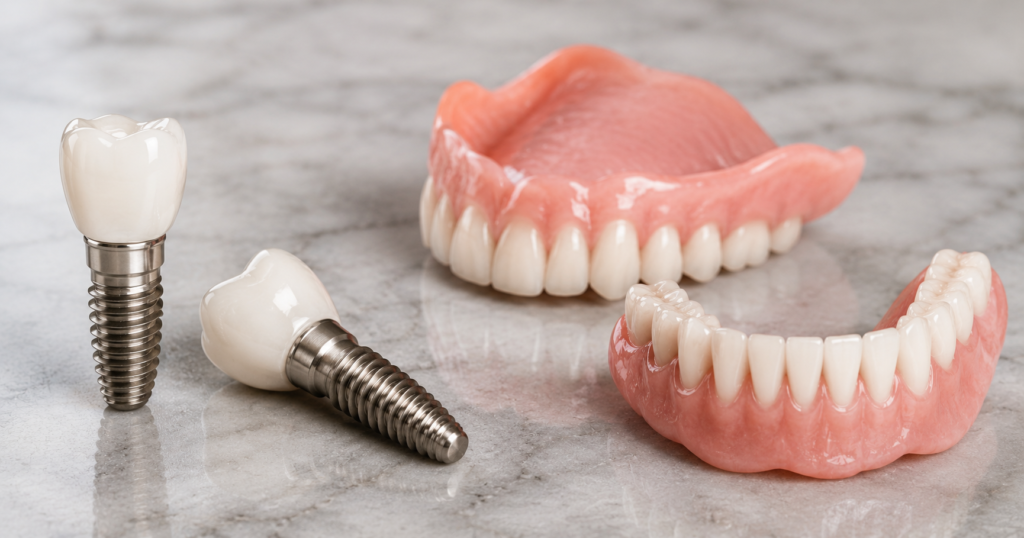
What Determines Dental Implants and Dentures Cost?
The cost of replacing missing teeth depends largely on the type of treatment selected. Traditional dentures, implant-supported dentures, and fixed implant restorations involve different procedures and materials.
Traditional dentures are removable appliances designed to replace missing teeth and restore basic chewing and appearance. They rest on the gums and can replace an entire upper or lower arch.
Implant-supported dentures use dental implants as anchors. Because implants are surgically placed into the jawbone, this treatment involves additional planning, surgery, healing, and restorative steps.
Other factors that may affect the overall treatment plan include:
- Number of missing teeth
- Number of implants required
- Condition of the gums
- Available jawbone
- Need for tooth extractions
- Need for bone grafting
- Type of denture or restoration
- Materials selected
- Temporary restorations
- Laboratory work
- Follow-up appointments
- Maintenance requirements
This is why an individualized dental evaluation is important before discussing your treatment options.
Traditional Dentures vs. Implant-Supported Dentures
Traditional dentures and implant-supported dentures can both replace missing teeth, but they provide different types of support.
Traditional dentures are removable and rest directly on the gums. They can be a practical option for patients who want a removable solution without implant surgery. However, some patients may experience movement while eating or speaking, particularly if the fit changes over time.
Implant-supported dentures use implants to provide additional stability. The implants act as anchors for the restoration, helping reduce unwanted movement.
The right choice depends on your oral health, jawbone condition, lifestyle, aesthetic expectations, and long-term goals.
What Are Full Set of Denture Implants?
Patients researching complete tooth replacement may come across the term full set of denture implants. This generally describes a full-arch replacement approach in which dental implants are used to support a complete set of replacement teeth.
Rather than relying only on the gums for support, the restoration is connected to strategically positioned implants. The implants are placed into the jawbone and allowed to heal. During this healing period, the bone can integrate with the implant surface, creating a stable foundation.
Once the implants have healed appropriately, the customized denture or full-arch restoration can be connected to them.
It is important to understand that a full-arch restoration does not necessarily require one implant for every missing tooth. The number and placement of implants depend on the patient’s anatomy and the specific restoration being planned.
How Implant-Supported Dentures Work
Implant-supported dentures generally involve several stages. The exact process varies according to the patient’s needs.
1. Initial Consultation
The process begins with an examination of your teeth, gums, jawbone, bite, and overall oral health. Imaging may be used to evaluate the available bone and determine whether implants are appropriate.
2. Treatment Planning
Your dentist develops a customized treatment plan based on the number of missing teeth, desired restoration, implant placement, and aesthetic goals.
3. Implant Placement
Dental implants are surgically positioned in the jawbone. The implants provide the foundation for the future restoration.
4. Healing and Integration
The implants require time to heal and integrate with the surrounding bone. The length of healing varies from patient to patient.
5. Restoration
After the implants are stable, the customized restoration can be attached to the implants. Your dentist checks the fit, bite, appearance, and function before completing treatment.
Dental Implants and Dentures Comparison
Instead of comparing treatments based only on price, consider what each option provides and how complex the process is.
| Treatment Option | Implant Surgery | Removable | Stability | Treatment Complexity | Best Consideration |
| Traditional Full Denture | No | Yes | Moderate | Lower | Complete tooth replacement without implants |
| Partial Denture | No | Yes | Moderate | Low to Moderate | Replacing several teeth when natural teeth remain |
| Implant-Supported Denture | Yes | Often Yes | High | Moderate to High | Added support and stability |
| Fixed Implant Restoration | Yes | No | Very High | High | Patients seeking a fixed solution |
| Full-Arch Implant Restoration | Yes | Usually No | Very High | High | Comprehensive replacement of an entire arch |
The most suitable option depends on your individual dental situation rather than simply choosing the least expensive treatment.
Why Implant-Supported Dentures May Require More Treatment
Implant-supported dentures typically involve more steps than conventional dentures. Traditional dentures primarily require impressions or digital records, fabrication, fitting, and adjustments.
Implant-supported treatment adds surgical placement of implants, healing, restoration attachment, and additional monitoring.
There may also be preliminary procedures. For example, if a patient has damaged teeth that need to be removed, extractions may be included in the treatment plan. Patients with insufficient jawbone may require additional procedures before implant placement can take place.
Because every patient’s situation is different, a personalized consultation is essential.
How Jawbone Health Affects Implant Treatment
Healthy bone structure is an important consideration when planning dental implants. When teeth are missing for an extended period, the jawbone may gradually lose volume because natural tooth roots are no longer present to stimulate the bone.
If there is not enough bone to securely support an implant, additional treatment may be recommended. Depending on the individual situation, bone grafting or another preparatory procedure may be considered.
This can affect both the treatment timeline and overall investment.
During your consultation at Beach Cities Dental Group, your dental team can evaluate your jawbone and determine whether additional preparation may be necessary.
What Can Be Included in a Dental Implant Treatment Plan?
When comparing treatment options, it is important to understand exactly what your treatment plan includes.
Depending on your needs, treatment may involve:
- Dental examination
- Diagnostic imaging
- Digital treatment planning
- Tooth extractions
- Temporary dentures
- Dental implant placement
- Healing appointments
- Abutments or attachment components
- Customized denture fabrication
- Final restoration
- Bite adjustments
- Follow-up visits
- Maintenance appointments
Not every patient will require every step. Your treatment plan should be based on your specific dental needs.
Materials and Restoration Design Matter
The restoration itself can also influence the overall treatment plan. Dentures and implant-supported restorations can be designed using different materials and techniques.
Your dentist considers factors such as:
- Appearance
- Strength
- Bite
- Comfort
- Gum contours
- Tooth shape
- Facial proportions
- Desired level of stability
A customized restoration is designed to work with your mouth rather than simply providing a generic replacement.
Are Dental Implants Worth Considering?
For some patients, implant-supported treatment can offer advantages over traditional removable dentures. Implants can provide a more stable foundation and may make everyday activities such as chewing and speaking more comfortable.
Another consideration is confidence. Patients who are concerned about dentures moving during conversations or meals may appreciate the additional support provided by implants.
However, dental implants are not automatically the right choice for everyone. Your oral health, bone structure, medical considerations, expectations, and ability to maintain good oral hygiene all need to be considered.
Understanding Financing and Insurance
Dental insurance coverage varies from one plan to another. Some plans may provide benefits for certain portions of tooth replacement treatment, while other procedures may have limitations or exclusions.
Before beginning treatment, ask for a detailed treatment plan so you can understand what procedures are being recommended.
Beach Cities Dental Group can discuss the treatment process with you and help you understand the available financial considerations associated with your recommended care.
How to Compare Your Options
When comparing traditional dentures with implant-supported solutions, look beyond the initial treatment investment.
Consider:
Stability
Traditional dentures rest on the gums, while implant-supported dentures receive additional support from implants.
Removability
Traditional dentures are removable. Some implant-supported dentures are also removable, while fixed implant restorations are designed to remain secured to the implants.
Treatment Time
Traditional dentures may involve fewer treatment stages. Implant treatment requires surgical placement and a healing period.
Bone Requirements
Dental implants require adequate bone support. Some patients may need additional preparation before implants can be placed.
Maintenance
All dentures require proper care. Implant-supported restorations also require attention to the implants, gums, attachment components, and surrounding tissues.
Long-Term Goals
Your preferred lifestyle and expectations should be part of the treatment discussion. Some patients prioritize removability, while others prioritize stability and a fixed restoration.
Caring for Dentures and Implant-Supported Restorations
Proper maintenance is essential regardless of which option you choose.
Traditional dentures should be cleaned regularly according to your dentist’s instructions. The gums and remaining oral tissues should also be kept clean.
Implant-supported dentures require attention to both the restoration and the areas around the implants. Regular dental appointments allow your dental team to monitor the condition of your gums, implants, attachments, and restoration.
Daily oral hygiene and professional dental care can help protect your investment and support long-term oral health.
Why Choose Beach Cities Dental Group?
Replacing missing teeth is a major decision, and having a dental team that takes time to understand your goals can make the process easier.
At Beach Cities Dental Group, we focus on individualized treatment planning rather than recommending the same solution for every patient. Dr. Georgia Haddad can evaluate your oral health and explain the differences between traditional dentures, implant-supported dentures, and other tooth replacement options.
The goal is to help you understand what each treatment involves so you can make an informed decision about your smile.
Frequently Asked Questions
1. What affects dental implants and dentures cost?
Several factors can affect the overall treatment investment, including the type of restoration, number of implants, materials, jawbone condition, extractions, additional procedures, laboratory work, and follow-up care. A personalized examination is needed to determine the appropriate treatment plan.
2. Are implant-supported dentures more stable than traditional dentures?
Implant-supported dentures generally receive additional stability from dental implants anchored in the jawbone. Traditional dentures rest primarily on the gums and may move more during chewing or speaking.
3. Can I receive a full-arch implant restoration if I have missing teeth?
Many patients with extensive tooth loss may be candidates for full-arch implant treatment. However, suitability depends on factors such as bone structure, oral health, and individual treatment goals. An examination is necessary to determine the appropriate approach.
4. Do I need bone grafting before dental implants?
Not everyone needs bone grafting. It may be recommended when there is insufficient bone to provide the necessary foundation for implant placement. Your dentist can determine whether additional bone preparation is needed after evaluating your jawbone.
5. How do I choose between dentures and dental implants?
The decision depends on your oral health, bone structure, lifestyle, preferences, and long-term goals. Beach Cities Dental Group can evaluate your needs and explain the advantages and limitations of each option so you can make an informed decision.
Make an Informed Decision About Tooth Replacement
Understanding dental implants and dentures cost involves more than comparing one number with another. Traditional dentures, implant-supported dentures, and fixed implant restorations involve different procedures, materials, treatment timelines, and maintenance requirements.
The best solution is the one that fits your oral health and personal goals.
If you are considering replacing several or all of your missing teeth, Beach Cities Dental Group can help you understand your options. Dr. Georgia Haddad can evaluate your smile, discuss your goals, and create a personalized treatment plan designed around your needs.