

Medically Reviewed by Dr. Georgia Haddad
Root canal treatment is a dental procedure used to treat infection or inflammation inside a tooth while preserving the natural tooth whenever possible. When bacteria reach the pulp, the soft tissue containing nerves and blood vessels inside the tooth, they can cause persistent pain, sensitivity, swelling, or an abscess. During a root canal, the damaged pulp is removed, the root canals are cleaned and disinfected, and the space is filled and sealed to help prevent reinfection.
At Beach Cities Dental Group, we understand that being told you may need a root canal can be concerning. Knowing what the procedure involves, why it may be recommended, how long recovery can take, and when a crown may be necessary can make the process easier to understand.
What Is Root Canal Treatment?
Root canal treatment, also known as endodontic treatment, addresses problems involving the pulp inside a tooth. The pulp contains nerves, blood vessels, and connective tissue. If the pulp becomes infected or severely inflamed, treatment may be necessary to prevent the condition from progressing.
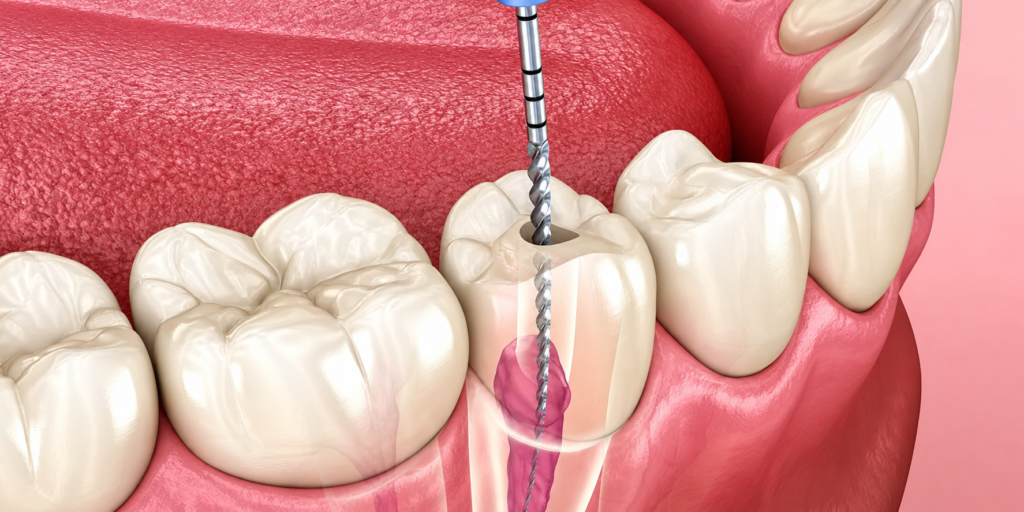
During a root canal, the dentist removes the damaged pulp, cleans and shapes the root canals, disinfects them, and fills and seals the space. The tooth is then restored with an appropriate filling, buildup, crown, or another restoration depending on how much healthy tooth structure remains.
The main purpose of root canal treatment is to remove infection or inflammation and preserve the natural tooth when it can be predictably saved.
Why Do You Need a Root Canal?
A root canal may be recommended when the pulp becomes infected or significantly inflamed. Several problems can damage the pulp, including:
- Deep tooth decay
- A cracked or fractured tooth
- A chipped or damaged tooth
- Trauma or injury
- Repeated dental procedures on the same tooth
- Problems with an existing filling or restoration
- Bacterial infection
Deep tooth decay is a common cause. When decay progresses through the outer layers of the tooth and reaches the pulp, bacteria can enter the inner chamber and trigger inflammation or infection.
An untreated infection can sometimes lead to an abscess, swelling, and damage to the tissues surrounding the tooth. Because symptoms can vary considerably, persistent dental discomfort should be evaluated rather than ignored.
Signs You May Need Root Canal Treatment
Not everyone who needs a root canal experiences the same symptoms. Some people have significant pain, while others may have an infection with few noticeable symptoms.
Possible warning signs include:
Persistent Tooth Pain
Pain that continues, returns repeatedly, or occurs without an obvious trigger can be associated with inflammation or infection inside the tooth. The discomfort may become more noticeable while eating or at certain times of the day.
Pain When Biting or Chewing
Pain when biting down or chewing may indicate an issue involving the pulp or tissues surrounding the tooth. An examination is especially important when biting pain occurs alongside sensitivity or swelling.
Lingering Hot or Cold Sensitivity
Temporary sensitivity does not necessarily mean you need a root canal. However, sensitivity that continues after the hot or cold stimulus has been removed can indicate irritation or inflammation affecting the pulp.
Swollen or Tender Gums
Swelling or tenderness around a particular tooth can sometimes be associated with an infection. The location and appearance of the swelling can help your dentist determine what may be causing the problem.
A Gum Pimple or Abscess
A small pimple-like bump on the gum near a tooth can develop when an infection drains through the surrounding tissues. An abscess should be professionally evaluated.
Darkening of the Tooth
A tooth that becomes darker after trauma or other damage may have experienced changes affecting the pulp. Although discoloration can have several causes, a dentist should evaluate unexplained changes.
Symptoms alone cannot determine whether you need a root canal. Your dentist will consider your symptoms, examine the tooth, and use dental imaging or other diagnostic tests when appropriate.
How Does Root Canal Treatment Work?
Although every case is different, root canal treatment generally involves several steps.
1. Examination and Diagnosis
The dentist first examines the affected tooth and evaluates your symptoms. This may include dental X-rays and tests designed to assess the condition of the pulp and surrounding tissues.
The purpose of the examination is to identify the source of the problem and determine whether root canal treatment is an appropriate option.
2. Local Anesthesia
Before treatment begins, local anesthesia is used to numb the tooth and surrounding area. Modern dental techniques are designed to make the procedure as comfortable as possible.
You may feel pressure, vibration, or movement during treatment, but you should not normally feel sharp pain while the tooth is properly anesthetized.
3. Isolating the Tooth
A dental dam may be placed around the tooth to help keep the treatment area clean and dry. It also helps prevent saliva from entering the tooth while the root canals are being treated.
4. Removing the Damaged Pulp
The dentist makes a small opening in the tooth to access the pulp chamber and root canals. Specialized instruments are then used to remove the infected or inflamed pulp.
5. Cleaning and Shaping the Canals
The root canals are carefully cleaned and shaped. This process removes infected material and prepares the canals to receive the filling material.
6. Filling and Sealing the Canals
After the canals have been cleaned and disinfected, they are filled with a biocompatible material commonly known as gutta-percha. The canals are then sealed to help prevent bacteria from entering again.
A temporary filling may be placed over the access opening if the permanent restoration will be completed at a later appointment.
7. Restoring the Tooth
The final step is restoring the tooth. Depending on the amount of remaining tooth structure, the tooth’s location, and the forces placed on it during chewing, the final restoration may be a filling, buildup, dental crown, or another appropriate restoration.
Root Canal vs. Dental Crown: What Is the Difference?
Root canal treatment and dental crowns are two different dental treatments, although they are often used together.
A root canal treats the inside of the tooth. It removes infected or inflamed pulp, cleans the root canals, and seals them.
A dental crown protects and restores the outside of the tooth. A crown is a custom-made restoration placed over a prepared tooth to restore its shape, strength, appearance, and function.
In simple terms:
Root canal = treats the problem inside the tooth.
Dental crown = protects and restores the tooth when a crown is appropriate.
A crown cannot replace root canal treatment when the pulp is infected, and having a root canal does not automatically mean that every tooth requires a crown.
Do You Need a Crown After a Root Canal?
A crown is frequently recommended after root canal treatment, especially for molars and premolars that experience substantial chewing forces. However, not every root canal-treated tooth automatically requires a crown.
The recommendation can depend on:
- Which tooth received treatment
- How much healthy tooth structure remains
- Whether the tooth has a crack or significant damage
- The size of an existing restoration
- The amount of chewing pressure the tooth receives
- The overall risk of fracture
Back teeth often need stronger protection because they absorb considerable chewing forces. Some front teeth may be restored with a filling or another restoration when enough healthy tooth structure remains.
Your dentist will evaluate the individual tooth and recommend the restoration that provides appropriate protection while preserving as much healthy tooth structure as possible.
Why Is a Crown Important After Root Canal Treatment?
Root canal treatment removes the infected or inflamed pulp, but the tooth may already have lost significant structure because of decay, cracks, previous restorations, or other damage.
A crown can provide additional protection by covering and reinforcing the remaining tooth structure when full coverage is appropriate.
Completing the recommended permanent restoration is also important because the tooth needs to be properly sealed and protected after treatment. Delaying the final restoration may increase the risk of damage or other complications.
The restoration is therefore an important part of completing treatment rather than simply a cosmetic choice.
What Happens After Root Canal Treatment?
Some tenderness or sensitivity after a root canal can be normal. The treated tooth and surrounding tissues may feel sore for a few days while they recover. Some people may also experience mild jaw soreness from keeping their mouth open during the appointment.
Your dentist will provide specific instructions based on your treatment.
If the tooth has a temporary filling or temporary crown, you may be advised to avoid chewing hard or sticky foods with that tooth until the permanent restoration is completed.
Continue brushing and flossing as recommended, while taking care around the treated area.
When Should You Contact Your Dentist?
Contact your dental provider if you experience:
- Severe or worsening pain
- Significant swelling
- Persistent pressure or discomfort
- Symptoms that return after treatment
- An uneven bite
- A temporary filling or crown becoming loose or falling out
Severe symptoms, swelling, or the return of previous symptoms should be evaluated rather than ignored.
How Long Does Root Canal Treatment Take?
The length of root canal treatment depends on the tooth and the complexity of the case.
Some root canals can be completed during one appointment, while others require two or more visits. Molars can sometimes require more time because they may have multiple canals and more complicated internal anatomy.
Your dentist can provide a more accurate estimate after examining the tooth and determining the treatment required.
Is Root Canal Treatment Painful?
Many people worry that a root canal will be extremely painful. Modern root canal treatment is performed using local anesthesia to numb the tooth and surrounding tissues.
During treatment, you may notice pressure, vibration, or movement, but the procedure is generally intended to be comfortable.
Mild soreness or sensitivity may occur afterward and is often temporary.
If you feel anxious about dental treatment, tell your dental team before the procedure. Discussing your concerns can help your dentist explain what to expect and determine appropriate ways to keep you comfortable.
How Long Does a Root Canal Tooth Last?
A properly treated and restored tooth can remain functional for many years and may last a lifetime in some cases.
Its long-term outlook depends on several factors, including:
- The condition of the tooth before treatment
- The quality of the root canal treatment
- The type and timing of the final restoration
- Oral hygiene
- Regular dental examinations
- The amount of force placed on the tooth
- Whether new decay or damage develops
A root canal does not make a tooth immune to future dental problems. The tooth can still develop decay, and a filling or crown can become damaged or loose.
Regular dental care remains important after successful root canal treatment.
Can a Root Canal Fail?
Root canal treatment is designed to remove infection and preserve the natural tooth, but problems can occasionally occur after treatment.
A previously treated tooth may require additional evaluation or treatment if:
- An untreated canal was missed
- The tooth has complicated root anatomy
- New decay develops
- A crown or filling becomes damaged or loose
- The tooth develops a new crack or fracture
- The final restoration does not adequately seal the tooth
- The original infection persists or returns
If symptoms return months or years after treatment, your dentist or an endodontist can evaluate the tooth. In appropriate situations, root canal retreatment may be considered.
Root Canal Treatment Cost
The cost of root canal treatment varies from patient to patient. Factors that can affect the total cost include:
- Which tooth requires treatment
- The complexity of the root canals
- Whether an endodontist is involved
- Geographic location
- Dental insurance coverage
- The need for a buildup or other restoration
- Whether a crown is recommended
A complete treatment plan may involve the examination, dental X-rays, root canal procedure, temporary restoration, buildup when necessary, and final restoration.
Because treatment needs vary, the most useful way to determine your expected cost is to have the tooth examined and discuss the recommended treatment and insurance benefits with your dental team.
At Beach Cities Dental Group, our team can explain the recommended procedures and help you understand what is involved in your individual treatment plan.
Root Canal Treatment vs. Tooth Extraction
When a tooth has severe damage or an infected pulp, some patients wonder whether extraction might be a simpler alternative.
When a tooth can be predictably saved, preserving the natural tooth is generally an important treatment goal. Root canal treatment provides a way to remove the infected pulp while allowing the natural tooth to remain in place.
Extraction removes the tooth and may create a need for replacement. Depending on the situation, replacement options can include a dental implant, bridge, or denture.
The appropriate choice depends on the condition of the tooth, the surrounding tissues, and the patient’s individual circumstances. Your dentist can explain whether root canal treatment, extraction, or another treatment is appropriate.
How to Care for a Root Canal-Treated Tooth
Good oral hygiene remains important after root canal treatment.
To help protect the treated tooth:
- Brush twice a day with fluoride toothpaste.
- Clean between your teeth every day.
- Attend regular dental examinations and cleanings.
- Complete the recommended permanent restoration promptly.
- Avoid chewing extremely hard objects.
- Do not use your teeth to open packages or bite non-food objects.
- Contact your dentist if the tooth becomes painful, loose, cracked, or sensitive again.
A root canal removes infected pulp, but it does not prevent future decay, fractures, or problems with restorations.
Frequently Asked Questions About Root Canal Treatment
What is root canal treatment used for?
Root canal treatment is used to treat infection or significant inflammation affecting the pulp inside a tooth. The damaged pulp is removed, the root canals are cleaned and disinfected, and the canals are filled and sealed before the tooth receives an appropriate restoration.
Do you always need a crown after a root canal?
No. Not every tooth that receives root canal treatment requires a crown. The recommendation depends on the tooth’s location, the amount of healthy structure remaining, the type of damage, and the risk of fracture. Molars and premolars often require crowns because they experience substantial chewing forces, while some front teeth may be restored with another type of restoration.
How long does it take to recover from a root canal?
Many people experience mild tenderness or sensitivity for a few days after treatment. Normal activities can often be resumed relatively quickly, but the treated tooth should be protected until the recommended permanent restoration is completed. Severe or worsening symptoms should be reported to your dentist.
Can a tooth get infected again after a root canal?
Yes. Reinfection can occur in some situations. New decay, a damaged restoration, an untreated canal, complicated root anatomy, or a new crack can contribute to problems after treatment. Your dentist can evaluate recurring symptoms and determine whether additional treatment may be appropriate.
Is root canal treatment better than extracting a tooth?
When a tooth can be predictably saved, root canal treatment provides an option for preserving the natural tooth. Extraction removes the tooth and may require replacement with an implant, bridge, or denture. Your dentist can evaluate the tooth and explain which option is most appropriate.
When Should You See a Dentist About a Root Canal?
You should not wait until dental pain becomes severe before seeking an evaluation. Persistent tooth sensitivity, pain when biting, swelling, a cracked tooth, or a gum abscess can indicate a problem that requires professional attention.
At Beach Cities Dental Group, Dr. Georgia Haddad and our dental team can evaluate your symptoms, identify the likely source of the problem, and discuss appropriate treatment options.
The sooner a damaged or infected tooth is evaluated, the sooner you can understand your options for treating the problem and preserving your natural tooth when possible.
Final Thoughts
Root canal treatment is a tooth-preserving procedure used to remove infected or inflamed pulp, clean and seal the root canals, and allow the natural tooth to remain functional. Although the procedure is often associated with pain, modern anesthesia and dental techniques are designed to make treatment comfortable.
A crown may be recommended afterward when the remaining tooth structure needs additional protection, particularly for teeth exposed to significant chewing forces. However, the need for a crown depends on the individual tooth and should be determined after a professional evaluation.
If you are experiencing persistent tooth pain, sensitivity, swelling, pain when biting, or other signs of a dental problem, schedule an evaluation with Beach Cities Dental Group to determine whether root canal treatment or another dental procedure is appropriate.