

Medically Reviewed by Dr. Georgia Haddad
If you have ever wondered, “Does everyone have wisdom teeth?”, you are not alone. Wisdom teeth, also called third molars, are the last permanent teeth to develop and usually appear toward the back of the mouth during the late teenage years or early adulthood. While many people develop one or more wisdom teeth, not everyone has all four—and some people never develop wisdom teeth at all.
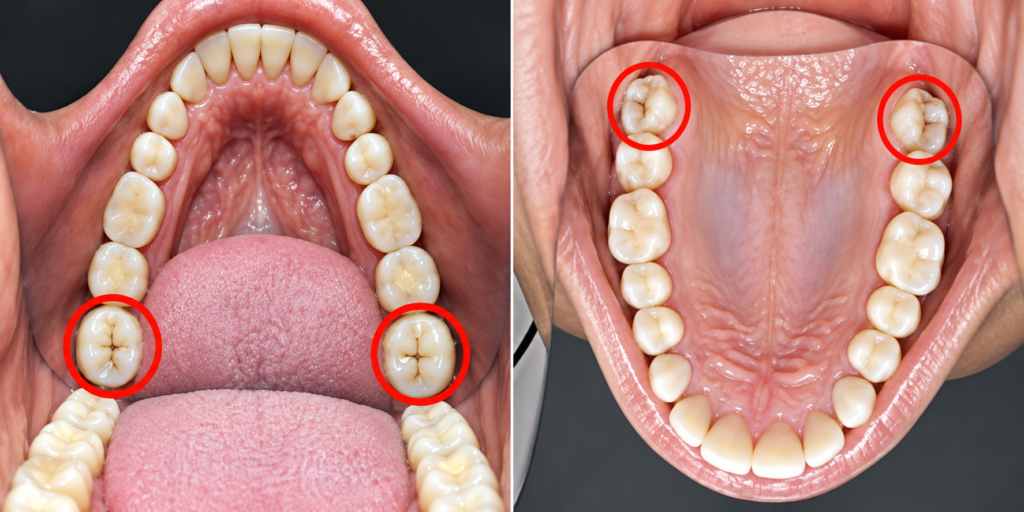
For people who do develop them, wisdom teeth removal is not automatically necessary. Whether a wisdom tooth should stay or be removed depends on its position, development, ability to function, available space, oral hygiene, and whether it is causing or is likely to cause dental problems. The American Dental Association notes that wisdom teeth can be healthy and functional when they erupt correctly, while impacted or poorly positioned teeth can create problems.
What Are Wisdom Teeth?
Wisdom teeth are the third molars located at the very back of the upper and lower jaws. Most adults have 28 permanent teeth without wisdom teeth, while a full set that includes four third molars contains 32 teeth.
They are called “wisdom teeth” because they generally appear later than the other permanent teeth. The American Dental Association says they commonly emerge between approximately ages 17 and 21, although the timing can vary considerably.
A person may develop:
- Four wisdom teeth
- Three wisdom teeth
- Two wisdom teeth
- One wisdom tooth
- No wisdom teeth
The number and development pattern can vary from person to person.
So, Does Everyone Have Wisdom Teeth?
No, not everyone has wisdom teeth.
Some people naturally never develop one or more third molars. This is sometimes described as third-molar agenesis, meaning the tooth never forms.
Other people may have wisdom teeth that have developed but have not erupted into the mouth. In these cases, a person may believe they do not have wisdom teeth when the teeth are actually positioned underneath the gums or within the jawbone.
Dental X-rays can help determine whether wisdom teeth are present, where they are located, and how they are developing. Imaging can also show the relationship between a wisdom tooth and surrounding structures, including nearby teeth and important anatomical areas.
Why Do Some People Never Develop Wisdom Teeth?
The development of wisdom teeth varies naturally among individuals. Genetics and differences in dental development can influence whether third molars form.
There is also considerable variation in the number of wisdom teeth a person develops. Having fewer than four does not necessarily mean something is wrong.
For example, one person may have two upper wisdom teeth but no lower wisdom teeth, while another person may have only one third molar. Someone else may have four wisdom teeth that remain inside the jaw.
This is one reason a dental examination and appropriate imaging are more useful than assuming everyone should have four.
When Do Wisdom Teeth Usually Come In?
Wisdom teeth are generally the last permanent teeth to develop and erupt. They often begin appearing during the late teens or early twenties, but there is no single age at which every person’s wisdom teeth will emerge.
Some wisdom teeth may begin developing earlier but remain underneath the gum for years. Others may partially erupt, while some never emerge into the mouth.
According to the American Dental Association, wisdom teeth commonly appear between ages 17 and 21. NHS dental information also describes them as developing and coming through during the late teens or early twenties.
Because timing varies, reaching a particular birthday does not automatically mean that wisdom teeth have finished developing or that they require removal.
Do Wisdom Teeth Always Grow In?
No. A wisdom tooth does not always erupt completely into the mouth.
Sometimes there is not enough room behind the second molars. The wisdom tooth may become trapped beneath the gum or jawbone. This is called an impacted wisdom tooth.
A wisdom tooth can be:
- Fully erupted
- Partially erupted
- Completely impacted
- Angled toward the neighboring tooth
- Positioned backward toward the jawbone
- Present but unable to erupt normally
An impacted wisdom tooth may remain without symptoms, but it can also create conditions that make cleaning difficult or increase the risk of dental problems.
What Problems Can Wisdom Teeth Cause?
Not every wisdom tooth causes problems. However, position and eruption status can affect oral health.
Potential issues include:
Pain and Swelling
An erupting or impacted wisdom tooth can cause discomfort, pressure, swelling, or tenderness around the back of the mouth.
Gum Infection
A partially erupted wisdom tooth can leave an area where food and bacteria become trapped beneath the gum tissue. This may contribute to inflammation or an infection known as pericoronitis.
Tooth Decay
Wisdom teeth can be difficult to brush and floss when they are positioned far back or partially covered by gum tissue. Food accumulation and bacterial plaque can contribute to decay.
Problems With the Neighboring Molar
An improperly positioned wisdom tooth can make cleaning around the second molar difficult. In some cases, decay or gum problems can develop around the neighboring tooth.
Cysts
In some situations, a cyst can develop around an impacted wisdom tooth. Dental imaging can help identify abnormalities that may not be visible during a routine visual examination.
Does Everyone Need Wisdom Teeth Removed?
No. Having wisdom teeth does not automatically mean they need to be removed.
A healthy wisdom tooth that has erupted properly, functions normally, can be cleaned effectively, and is not associated with disease may be monitored rather than removed.
The American Dental Association recommends evaluating individual circumstances, including symptoms, infection, cysts, damage to neighboring teeth, gum disease, and tooth decay.
Similarly, oral surgery guidance emphasizes evaluating both the potential risks of keeping a wisdom tooth and the risks associated with removing it. For disease-free, asymptomatic wisdom teeth, ongoing monitoring can be an appropriate approach in some patients.
Is It Possible to Keep Wisdom Teeth for Life?
Yes. Some people keep their wisdom teeth throughout their lives without developing significant problems.
A wisdom tooth does not necessarily need to be removed simply because it exists.
However, keeping wisdom teeth means maintaining good oral hygiene and having them evaluated during routine dental visits. Your dentist may monitor their position, eruption, surrounding gum tissue, and condition over time.
The American Dental Association specifically notes that wisdom teeth that are retained should continue to be monitored because problems can develop later.
Do Wisdom Teeth Stop Growing After 25?
The idea that wisdom teeth simply “stop growing” at age 25 is an oversimplification.
The tooth itself develops over time, and eruption can occur at different ages. By the mid-twenties, many people have already experienced wisdom tooth development and eruption, but that does not mean every person’s third molars follow the same schedule.
A wisdom tooth that remains impacted can stay within the jaw even after the typical eruption years. Its position and surrounding structures can still be evaluated through dental examinations and X-rays.
Therefore, age alone should not determine whether a wisdom tooth needs treatment.
What Happens If You Never Remove Your Wisdom Teeth?
If your wisdom teeth are healthy, functional, and easy to maintain, they may not need to be removed.
On the other hand, an impacted or partially erupted wisdom tooth may require treatment if it causes repeated infection, pain, decay, gum disease, damage to neighboring teeth, or another dental complication.
The NHS states that wisdom teeth that are not causing problems are generally left in place and monitored during routine dental appointments.
This means the decision is not simply “wisdom teeth versus no wisdom teeth.” Instead, your dental professional considers your individual anatomy, symptoms, oral hygiene, tooth position, and findings from an examination and appropriate imaging.
How Does a Dentist Check Wisdom Teeth?
A dental evaluation usually begins with a review of your symptoms and dental history, followed by an examination of the back areas of your mouth.
If necessary, your dentist may recommend an X-ray to determine:
- Whether wisdom teeth are present
- How many wisdom teeth have developed
- Whether they are impacted
- Their angle and position
- Their relationship to neighboring teeth
- Whether there are signs of decay or other abnormalities
Imaging is especially useful when a wisdom tooth cannot be seen fully in the mouth.
At Beach Cities Dental Group, Dr. Georgia Haddad and our dental team can evaluate wisdom teeth as part of a comprehensive dental examination and help patients understand what their X-rays and clinical findings mean.
When Should You See a Dentist About Wisdom Teeth?
You should schedule a dental evaluation if you experience:
- Pain at the back of your mouth
- Swelling around a wisdom tooth
- Red or irritated gum tissue
- Difficulty opening your mouth
- Bad taste or drainage near the back molar
- Food repeatedly becoming trapped
- Difficulty cleaning around a wisdom tooth
- Persistent discomfort near the jaw
- Swelling that affects your face or jaw
Severe swelling, fever, difficulty swallowing, or difficulty breathing can require urgent dental or medical attention.
Frequently Asked Questions
Is it true that everyone has wisdom teeth?
No. Not everyone develops wisdom teeth. Some people naturally develop fewer than four, while others do not develop third molars at all. Some people also have wisdom teeth that remain impacted beneath the gums or within the jaw, so an X-ray may be needed to determine whether they are present.
Do wisdom teeth stop growing after 25?
Not necessarily. Wisdom teeth commonly develop and erupt during the late teens and early twenties, but individual development varies. A wisdom tooth may remain impacted or unerupted beyond age 25. Your dentist can use an examination and imaging to evaluate its development and position.
Is it okay to never remove wisdom teeth?
Yes, in some cases. Healthy wisdom teeth that are properly positioned, functional, cleanable, and free from disease may be monitored rather than removed. However, wisdom teeth should continue to be evaluated because problems can develop later.
Can you have wisdom teeth without knowing it?
Yes. Wisdom teeth can remain underneath the gums or within the jawbone without being visible. Some people also have wisdom teeth that are only partially erupted. Dental X-rays can reveal teeth that cannot be seen during a normal visual examination.
How do I know if my wisdom teeth need to be removed?
A dentist needs to evaluate the position and condition of your wisdom teeth, along with your symptoms and overall oral health. Removal may be considered when there is pain, infection, decay, gum disease, damage to neighboring teeth, cyst formation, or another clinically relevant problem.
Schedule an Appointment for a Wisdom Teeth Evaluation
Not everyone has wisdom teeth, and not everyone who has them needs wisdom tooth removal. The right approach depends on how your teeth have developed, where they are positioned, whether they can be maintained properly, and whether there are current or potential dental problems.
If you have questions about your wisdom teeth or are experiencing pain, swelling, or other symptoms, schedule an appointment with Beach Cities Dental Group. Dr. Georgia Haddad and our team can examine your teeth, review appropriate imaging, and explain your available treatment options based on your individual dental needs. Call us at +1 805-278-8887 to schedule your appointment.