

Did you know that around 40% of your tooth surfaces remain unclean when you brush your teeth without flossing? It’s true that skipping floss is similar to cleaning your car’s front and rear exclusively, leaving the sides unclean. Every day at Beach Cities Dental Group, we meet patients who brush twice a day yet still have swollen gums or unexpected cavities.
The secret to a healthy, sparkling smile isn’t just about how long you brush; it is about how well you clean your teeth. Learning the correct way to floss can improve your oral health, prevent costly dental work, and give you a breath of freshness.
In this complete guide, our team at Beach Cities Dental Group breaks down everything you need to know about cleaning between your teeth like a pro.
Why Flossing Is Important for Daily Health
Prior to learning how to floss your teeth, you should know why it is important. You can feel this when you eat; small food particles and bacteria get stuck between your teeth where toothbrush bristles can’t reach. And over time, this buildup hardens into plaque and tartar, which later create severe problems.
Why it’s important to make flossing a daily habit:
- Prevents Hidden Cavities: Enamel is destroyed by plaque trapped between teeth, leading to “silent” cavities that are not visible in the mirror.
- Prevents gum infection: Trapped bacteria cause swelling of gums and bleeding, which develops into periodontitis.
- Eliminates Bad Breath: Chronic halitosis is one of the most common causes due to food debris getting stuck between teeth that is rotting.
- Protects Your Heart and Body: Recent research in dental science has revealed the association of gum inflammation with other health problems such as diabetes and heart disease.
Choosing the Right Tools for Your Teeth
Not all dental floss is created equal, and choosing the right one makes the job much easier:
| Floss Type | Best Suited For | Key Benefit |
| Traditional Waxed Floss | Tight gaps between natural teeth | Glides smoothly without shredding |
| Unwaxed Floss | Average tooth spacing | Squeaks when teeth are completely clean |
| Dental Tape | Wide gaps or dental bridge work | Flatter, wider shape is gentle on sensitive gums |
| Water Flossers | Braces, dental implants, or sensitive gums | Uses water pressure to flush out debris effortless |
| Floss Picks | On-the-go cleaning or limited mobility | Easy to hold with a single hand |
Step-by-step Guide on How to Floss Properly
Flossing shouldn’t hurt or be inconvenient. Our dental team and Dr. Georgia Haddad recommend following this simple 5-step approach:
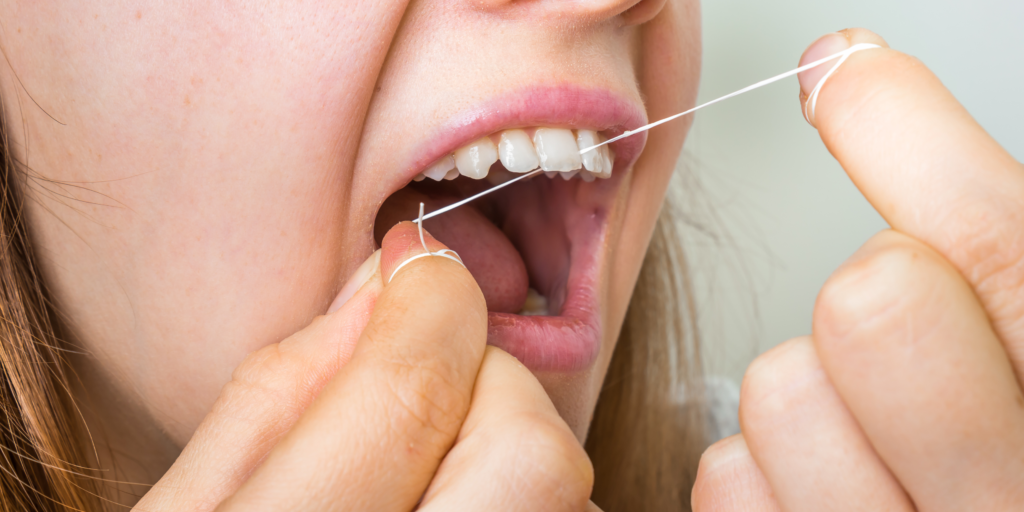
- Use a fair amount of floss: Tear off about 18 inches of dental floss. Mostly wrap it around your middle fingers with about 2-3 inches of space between to work with.
- Hold It Tightly: Place the string between your index finger and thumb, and slide it softly through your fingers.
- Slide, Don’t Snap: Gently push the string between the two teeth. Do not force it or snap it into your gums, as it may cut the tender tissue.
- Form a “C” Shape: Wrap the floss around a tooth in a “C” shape. Slide it in and out over the tooth surface, just below the gum line.
- Unroll Fresh Sections: When you go from tooth to tooth, unwind a fresh portion of floss as you do so, which prevents you from reintroducing bacteria to new locations.
Common Flossing Mistakes You Should Avoid Today
Even those who brush between their teeth daily can develop bad habits. Here are the top mistakes that we see at Beach Cities Dental Group and how to correct them:
- When seating the Floss into Gums: Over-exertion will harm gums and lead to bleeding. To go around corners, glide through gently with a sawing motion.
- Recycling the same section of the string: Using a contaminated part of the string will carry plaque and bacteria from one gap to another.
- Avoiding Gum recession: If you experience light bleeding, this may indicate that there is already plaque creating inflammation to your gums. Continue to floss gently, and the bleeding will typically stop in another week or two.
- Forget the Back Teeth: Most chewing takes place in the back molars, and they tend to be the riskiest areas for cavities. Be sure to push the floss between your last molars!
How Often Should You Clean Your Teeth
Brushing between teeth once a day is ideal for maintaining good oral hygiene. It is best to do this before going to sleep, as it will remove all the food particles that may have accumulated during the day, before bacteria have a chance to multiply at night. The order in which you floss is up to you, but the fluoride in your toothpaste will work more effectively between the teeth if you floss first and then brush.
Frequently Asked Question
If I have braces or dental bridges, how do I floss properly?
Use a flosser or a water flosser. A threader helps you safely thread conventional floss under wires or under bridge work, without harming appliances.
Does a water flosser work better than floss?
For people with braces or dental implants in specific, water flossers are excellent for removing larger food particles and reducing gum swelling. However, the most effective tool for removing sticky plaque from tooth surfaces is still conventional string floss. When combined, this gives you the best possible clean!
Why do I get bleeding gums when I floss my teeth?
Gum bleeding is usually caused by moderate irritation from residual plaque. Regular oral hygiene will reduce swelling and halt bleeding in 7 to 10 days. When you do, visit your dentist if the bleeding persists.
Does brushing with floss open up larger gaps between the teeth?
No; Proper technique will not move the teeth or open up the spaces between them. Floss only clears the hidden layer of plaque, which makes the gaps appear bigger when cleaned.
Should I floss before or after brushing my teeth?
Flossing before brushing is recommended. Cleaning up first allows the fluoride in your toothpaste to coat all of your tooth surfaces during brushing because your teeth are more open.
Experience Personalized Care at Beach Cities Dental Group
Understanding how to floss properly is one of the easiest ways to protect your smile for a lifetime. However, home care is only half the equation; professional dental cleanings and checkups are essential for keeping your teeth and gums in top shape.
At Beach Cities Dental Group in Oxnard, CA, Dr. Georgia Haddad and our warm, friendly team are dedicated to offering gentle, appropriate dental care that suits your unique needs. Whether it is time for your routine checkup or you need guidance on improving your home care routine, we are here to help you smile with confidence!
Are you ready for a healthier, brighter smile?
Schedule your visit with Beach Cities Dental Group today or call us at (805) 278-8887!