

By Beach Cities Dental Group, Oxnard, CA
Most people with healthy gums do well with a cleaning every six months. If you have gum disease, smoke, have diabetes, wear braces, or have dental implants, your dentist may want you in every three to four months. Your own interval comes from an exam, and it can run shorter or longer than six months.
Is every six months really the rule?
Six months is a habit more than a rule. It's a convenient default that dentists have used for decades, and it fits a lot of people. But research hasn't found one best interval for everybody, and some national guidelines, including the UK's NICE guidance, tie the timing to each patient's risk instead.At Beach Cities Dental Group, we recommend that patients come in at least twice a year. That's the floor for most people. Some need more.
What decides your interval
Dentists and hygienists generally look at four things.
Pocket depth. The gap between tooth and gum is measured at several points around each tooth. Shallow pockets are easy to keep clean. Deeper ones trap bacteria that a toothbrush can’t reach.
Bleeding. Gums that bleed when probed are inflamed, even if they don’t hurt.
How fast tartar builds. Some people lay down tartar within a few months. Others barely do.
Your cavity history. New cavities since your last visit mean your current routine isn’t enough.
We screen for gum disease at every check-up, so this assessment happens each time you’re in the chair, not just at your first visit.
Signs you shouldn't wait for your next visit
Book sooner if you notice bleeding or swollen gums, a loose tooth, gums pulling back from your teeth, a bad taste or breath that won’t go away, or a bite that suddenly feels different. Early gum disease often doesn’t hurt, so waiting for pain is a bad plan.
What if it's been years?
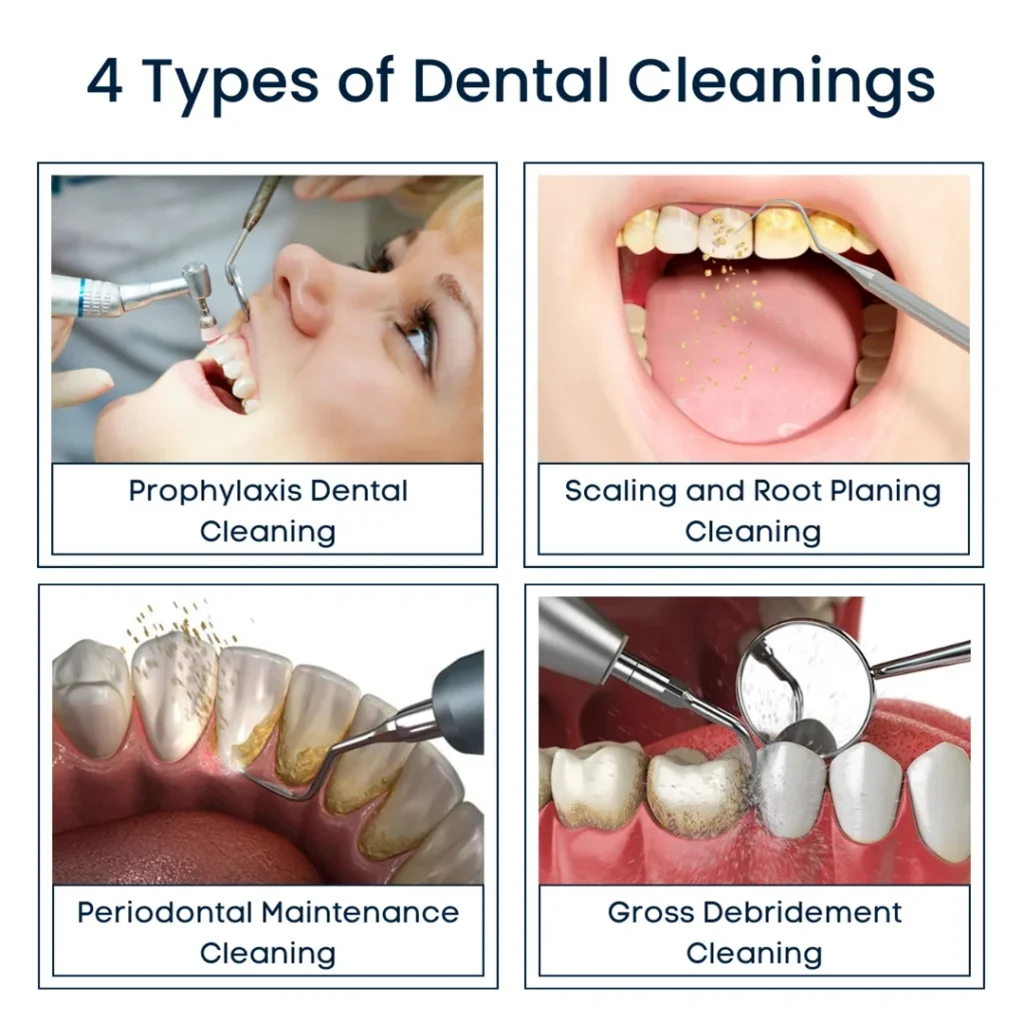
Say it’s been four years since your last cleaning. Tartar has had that long to harden along and below the gumline, and a routine polish won’t remove it. You may need a heavier first cleaning, sometimes split across two visits, before you settle into a regular schedule. Nobody will lecture you about the gap. We’d rather see you late than not at all, and if dental anxiety is what kept you away, we offer sedation options.
Kids, pregnancy, and older adults
1. Kids. Most do well every six months, starting when the first baby teeth come in. Kids with braces or a lot of cavities may need more. See our pediatric dentistry page.
2.Pregnancy. Hormone changes make gums more prone to swelling and bleeding, so many dentists suggest keeping regular cleanings and sometimes adding one.
3.Older adults. Dry mouth from medications raises cavity risk, and a shorter interval often makes sense.
Holistic vs biolHow often you need a cleaning, by risk levelogical dentistry: side by side
| Your Situation | Typical Interval | Why |
|---|---|---|
| Healthy gums, few or no cavities | Every 6 months | Little plaque buildup, low risk between visits |
| History of cavities, dry mouth, or braces | Every 4 to 6 months | Food and plaque stay put longer, so decay and gum irritation move faster |
| Gum disease, smoking, or diabetes | Every 3 to 4 months | Bacteria rebuild under the gumline within weeks |
| Dental implants | Every 3 to 6 months | Gum inflammation around an implant can threaten it |
| Treated for gum disease | Every 3 to 4 months (periodontal maintenance) | Keeps pockets from reopening |
These are typical ranges, not promises.
Will insurance cover more than two cleanings a year?
Most plans cover two preventive cleanings a year. Some cover extra visits if you have a history of gum disease, so it’s worth asking your plan. If your dentist wants you in four times a year, read what a cleaning costs without insurance and what your plan may cover first.
FAQ
How many times a year should you get a dental cleaning?
Twice a year suits most people with healthy gums. People with gum disease, diabetes, or implants often need three or four.
Is it OK to get your teeth cleaned every 3 months?
Yes, if your dentist recommends it. For some patients it’s the interval that keeps gum disease from coming back.
Can you go a year without a cleaning?
Ask your dentist before you stretch it. Tartar can build quietly, and gum disease often has no pain until it’s advanced.
What happens if you skip your cleanings?
Plaque hardens into tartar, gums become inflamed, and gingivitis can progress to periodontitis.
How often should children get their teeth cleaned?
Usually every six months, with a first visit once baby teeth appear.
Ready to find your schedule?
We'll check your gums and set an interval based on your mouth. Book one of our professional dental cleanings in Oxnard, or read about periodontal therapy if you've been told you have gum disease.
Read how our .
1801 Solar Dr., Suite 290, Oxnard · Mon–Thu 8AM–5PM · Fri 8AM–12:30PM