

Medically reviewed by: Dr. Georgia Haddad
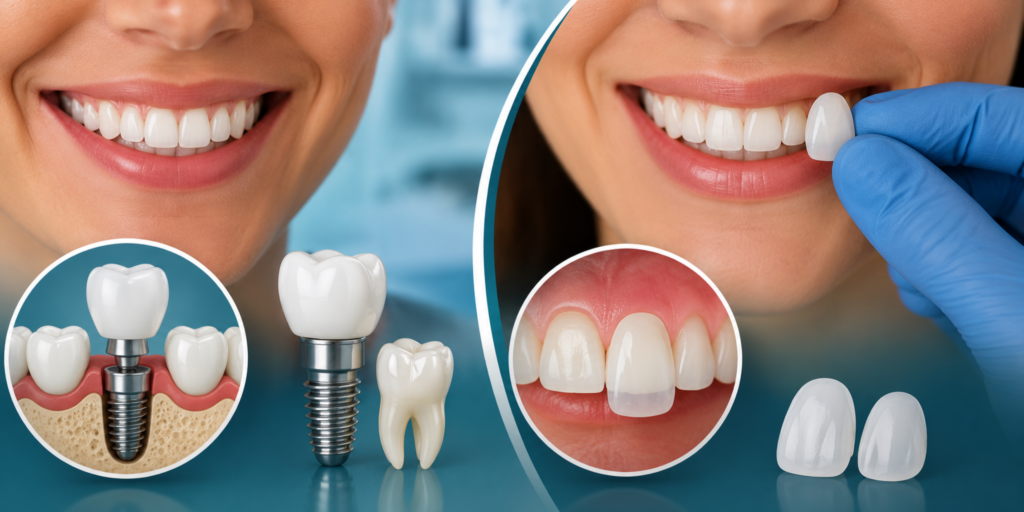
Choosing between dental implants and veneers depends on what you want to correct. Although both treatments can improve the appearance of your smile, they are designed for very different dental needs.
Dental implants are used to replace missing teeth, while veneers are primarily used to improve the appearance of existing teeth that are suitable for cosmetic treatment.
Understanding the differences between dental implants vs veneers can help you have a more informed conversation with your dentist and choose treatment based on your oral health, goals, and long-term needs.
Quick Answer
Dental implants and veneers are not interchangeable treatments.
Dental implants are generally considered when a tooth is missing or cannot be predictably restored. An implant replaces the missing tooth with a post placed in the jawbone and a restoration such as a crown.
Dental veneers are thin shells bonded to the front of existing teeth. They are primarily used for cosmetic concerns such as discoloration, minor chips, small gaps, or changes in tooth shape.
Veneers generally require less treatment time and have a lower initial cost than implants. Dental implants involve surgery and a longer healing period but can provide durable tooth replacement when a natural tooth is missing.
The right option depends on the condition of your teeth, gums, jawbone, bite, and overall oral health.
Dental Implants vs Veneers at a Glance
| Feature | Dental Implants | Dental Veneers |
| Primary purpose | Replace a missing or non-restorable tooth | Improve the appearance of an existing tooth |
| Best for | Missing teeth or teeth that cannot be predictably restored | Discoloration, minor chips, small gaps, uneven shape |
| Treatment type | Surgical tooth replacement | Cosmetic dental treatment |
| Tooth structure | Replaces a missing tooth | Uses existing tooth structure |
| Treatment timeline | Usually requires healing time | Generally completed more quickly |
| Upfront cost | Generally higher | Generally lower |
| Longevity | Can last for decades with proper care | Can last many years with proper care |
| Main consideration | Bone, gum health, and surgical candidacy | Tooth structure, bite, and cosmetic goals |
| Insurance | Coverage varies by plan and circumstances | Usually considered cosmetic and not covered |
What Are Dental Implants?
A dental implant is a tooth-replacement solution designed to replace a missing tooth from the root upward. An implant post is surgically placed into the jawbone, where it can integrate with the surrounding bone. After healing, a restoration such as a custom crown is attached to complete the replacement.
Dental implants may be used to:
- Replace a single missing tooth
- Replace several missing teeth
- Support a dental bridge
- Help stabilize certain dentures
- Restore chewing function
- Provide a fixed alternative to some removable tooth-replacement options
Implant treatment requires an evaluation of the gums, jawbone, bite, and overall oral health. If there is insufficient bone to support an implant, bone grafting or another preparatory procedure may sometimes be recommended.
Benefits of Dental Implants
Dental implants can offer several advantages when tooth replacement is necessary.
Natural-looking results
A custom crown can be designed to match the appearance of surrounding teeth, helping create a natural-looking smile.
Restored chewing function
Because an implant-supported restoration is anchored in the mouth, it can provide a stable foundation for biting and chewing.
Support for jawbone health
The implant post is placed in the jawbone and can provide stimulation that helps maintain the bone around the implant site after tooth loss.
Long-term durability
With appropriate care and regular dental visits, dental implants can provide long-lasting tooth replacement. The implant itself and the restoration attached to it have different expected lifespans.
No preparation of neighboring teeth for a single implant
When replacing one missing tooth, an individual implant can avoid the need to prepare adjacent healthy teeth as would typically be required for a traditional tooth-supported bridge.
Versatile tooth replacement
Implants can replace individual teeth or be used to support bridges and certain types of dentures when multiple teeth are missing.
Drawbacks of Dental Implants
Dental implants can be an excellent option for appropriate patients, but they also involve considerations that should be discussed before treatment.
- Surgical treatment: Implant placement requires a surgical procedure.
- Healing time: The implant may need time to integrate with the surrounding bone before the final restoration is placed.
- Higher initial cost: Implant treatment generally costs more upfront than cosmetic veneer treatment.
- Additional procedures: Some patients may require bone grafting or other preparatory treatment.
- Potential complications: As with any surgical procedure, complications such as infection, nerve-related symptoms, or problems with healing are possible.
- Implant failure: In some cases, an implant may not successfully integrate with the bone and may need additional treatment.
- Maintenance: Implants still require regular brushing, flossing, professional dental care, and monitoring of the surrounding gums and bone.
What Are Dental Veneers?
Dental veneers are thin, custom-made shells bonded to the front surface of existing teeth. They are commonly made from porcelain or composite resin and are primarily used to improve cosmetic concerns.
Veneers may be considered for:
- Stained or discolored teeth
- Minor chips
- Small gaps
- Uneven tooth shapes
- Slightly worn or irregular-looking teeth
- Cosmetic smile concerns that cannot be adequately addressed with whitening alone
Veneers do not replace missing teeth. They require sufficient natural tooth structure for bonding, and traditional veneer treatment may involve removing a small amount of enamel.
Benefits of Dental Veneers
Veneers can provide noticeable cosmetic improvements when the underlying teeth are healthy and suitable for treatment.
Improve tooth color
Veneers can cover certain types of discoloration, including stains that may not respond sufficiently to conventional teeth whitening.
Improve tooth shape
Custom veneers can alter the appearance of teeth that are uneven, small, worn, or irregularly shaped.
Address minor gaps
In appropriate cases, veneers can improve the appearance of small spaces between teeth.
Create a more balanced smile
Multiple veneers can be designed to create a more consistent appearance in terms of tooth shape, size, and color.
Natural-looking appearance
Porcelain veneers can be customized to complement the surrounding teeth and facial features.
Faster cosmetic transformation
Veneers generally require significantly less treatment time than the multi-stage healing process associated with dental implants.
Simple daily maintenance
Veneers can be cared for with regular brushing, flossing, professional cleanings, and good oral hygiene habits.
Drawbacks of Veneers
Veneers are not suitable for every patient. Important considerations include:
- Enamel removal: Traditional veneers may require removal of some enamel, making treatment generally irreversible.
- Sensitivity: Some patients experience temporary sensitivity after tooth preparation.
- Potential damage: Veneers can chip, crack, or become damaged, particularly when exposed to excessive forces.
- Bruxism concerns: Grinding or clenching may increase the risk of veneer damage.
- Fixed color: Once porcelain veneers are bonded, their color cannot be whitened like natural teeth.
- Underlying oral health: Veneers do not treat cavities, gum disease, or other underlying dental problems.
- Replacement: Veneers may eventually need to be replaced because of normal wear or damage.
- Insurance: Cosmetic veneers are generally not covered by standard dental insurance plans, although coverage varies.
The Core Difference: Restorative vs Cosmetic
The simplest way to understand dental implants vs veneers is to consider whether the tooth is missing or still present.
If a tooth is missing, a veneer cannot replace it because there is no natural tooth structure for the veneer to cover.
If a tooth is present and structurally healthy but has cosmetic imperfections, a veneer may be an appropriate option.
However, a badly damaged tooth does not automatically require an implant. Depending on how much healthy tooth structure remains, treatments such as a filling, root canal treatment, crown, or other restorative procedure may be possible.
Some patients may also benefit from a combination of treatments. For example, an implant can replace a missing tooth while veneers improve the appearance of surrounding natural teeth.
What Is the Dental Implant Process?
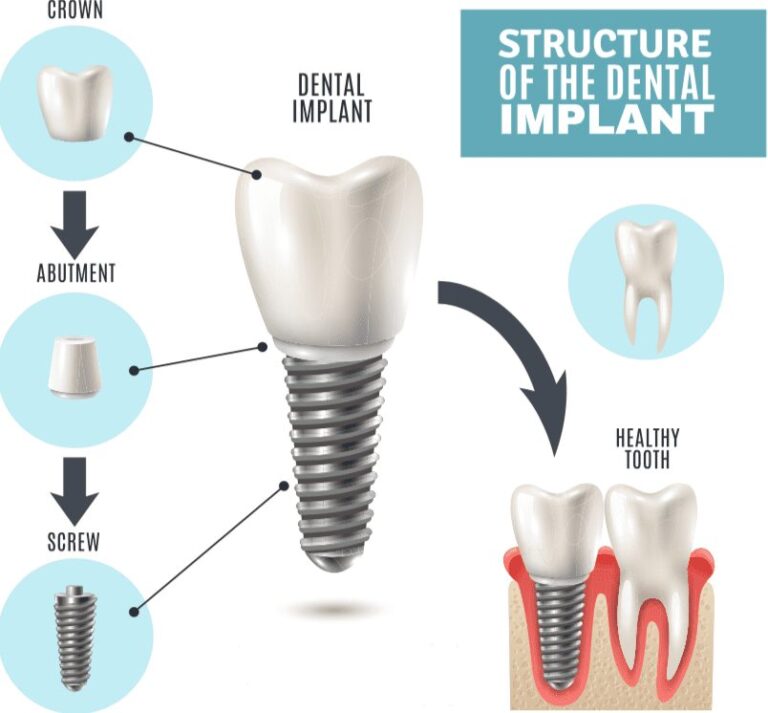
Dental implant treatment generally involves several stages.
1. Dental evaluation
Your dentist examines your teeth, gums, bite, and jawbone. Dental X-rays or 3D imaging may be used to evaluate the implant site.
2. Treatment planning
Your dentist determines whether an implant is appropriate and whether additional procedures, such as bone grafting, may be necessary.
3. Implant placement
The implant post is surgically placed into the jawbone.
4. Healing and integration
The implant needs time to integrate with the surrounding bone. The length of this period varies from patient to patient.
5. Abutment and crown
Once the implant site has healed appropriately, the components supporting the final restoration are placed and a custom crown is attached.
The complete timeline varies according to individual healing, bone health, and whether additional procedures are required.
What Is the Dental Veneer Process?
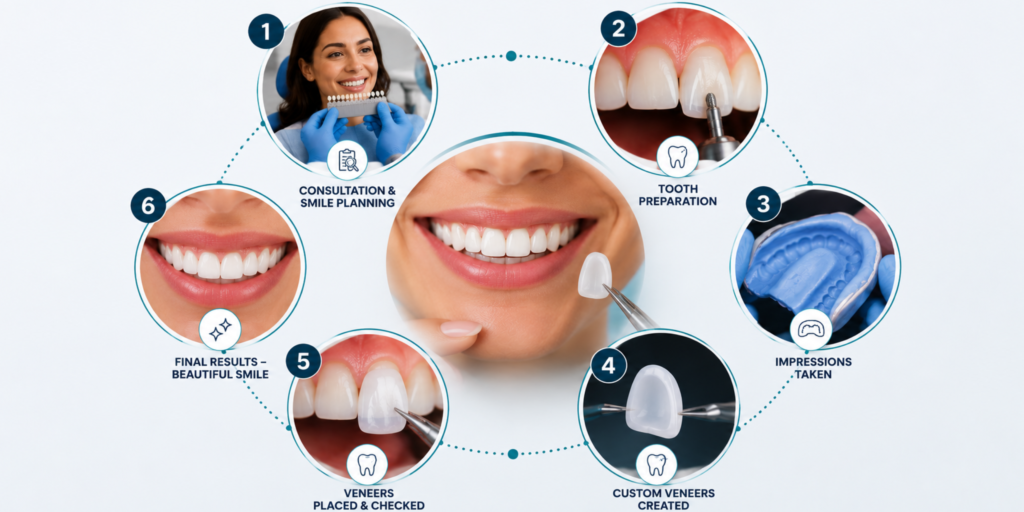
Veneer treatment begins with a consultation to determine whether veneers are appropriate for your teeth and smile goals.
Your dentist evaluates your tooth structure, bite, gums, color, and overall oral health. If traditional porcelain veneers are selected, a small amount of enamel may be removed to create space for the veneers.
Digital scans or impressions may then be used to create the custom restorations. Once the veneers are ready, they are carefully fitted and bonded to the teeth.
Composite veneers may involve a different process because composite material can often be shaped directly on the tooth during treatment.
The exact number of appointments depends on the type of veneers, number of teeth being treated, and your individual treatment plan.
Who Is a Candidate for Veneers or Dental Implants?
There is no single treatment that is right for everyone.
You may be a candidate for dental implants if:
- You have one or more missing teeth.
- A tooth cannot be predictably restored.
- Your gums and surrounding oral tissues are healthy enough for treatment.
- You have an adequate jawbone or may be able to undergo bone grafting when appropriate.
- You can maintain good oral hygiene and follow your dentist’s aftercare instructions.
You may be a candidate for veneers if:
- Your teeth are present and have adequate structure.
- You have cosmetic concerns such as discoloration, minor chips, or uneven shape.
- Your gums and teeth are sufficiently healthy.
- Your bite and oral habits are compatible with veneer treatment.
- You understand that traditional veneers may involve permanent enamel removal.
A dental examination is necessary before choosing either treatment. In some cases, another option may provide a more appropriate solution.
Cost Comparison
Cost is an important consideration when comparing veneers and implants, but there is no single price that applies to every patient.
Veneers generally have a lower initial treatment cost than dental implants, although the total cost depends on the number of teeth treated, materials used, and individual treatment needs.
Dental implants usually involve a higher initial investment because treatment can include the implant post, surgical placement, imaging, abutment, crown, and potentially additional procedures such as bone grafting.
Long-term value also depends on the treatment selected, the number of teeth involved, materials, maintenance, durability, and whether replacement treatment is eventually necessary.
For that reason, comparing only the initial price may not provide a complete picture of the overall investment.
Longevity and Maintenance
Both veneers and dental implants require proper oral hygiene and regular dental care.
Dental implants
Dental implants can remain functional for many years and potentially decades when properly maintained. The implant post and the crown attached to it should be considered separately because the crown may eventually require replacement due to normal wear.
Porcelain veneers
Porcelain veneers can also provide long-lasting cosmetic results when properly cared for. Their lifespan depends on factors such as oral hygiene, bite forces, material, habits, and professional maintenance.
Composite veneers
Composite veneers generally have a shorter expected lifespan than porcelain veneers, although they may offer advantages such as easier repair and a lower initial cost.
Regardless of treatment, good brushing, flossing, routine dental examinations, and professional cleanings are important for maintaining oral health.
Are Dental Implants Safe and Do They Hurt?
Dental implant placement is a surgical procedure, so some soreness, swelling, or discomfort can occur during recovery. Local anesthesia is typically used during placement to help keep the procedure comfortable.
Before recommending an implant, your dentist evaluates your oral health, jawbone, gums, medical history, and other factors that may affect treatment.
Veneers are generally less invasive than implant placement. However, traditional veneers may involve enamel preparation, and some patients experience temporary sensitivity afterward.
Your dentist can explain the expected discomfort, healing period, potential risks, and aftercare instructions based on your specific treatment plan.
Can a Damaged Tooth Get a Veneer, Crown, or Implant?
A damaged tooth does not automatically need to be replaced with an implant.
The appropriate treatment depends on the amount of healthy tooth structure remaining and whether the tooth can be predictably restored.
A veneer may be appropriate for a structurally sound tooth with cosmetic concerns such as minor chips, discoloration, or shape irregularities.
A dental crown may be considered when a tooth has more significant structural damage but can still be restored.
If a tooth is missing or cannot be predictably restored, a dental implant, bridge, or denture may be considered for replacement.
A professional dental examination is the best way to determine whether the tooth can be saved and which treatment is appropriate.
Which Is Right for You? Checklist
Consider these questions when comparing dental implants vs veneers:
- Is the tooth missing? A veneer cannot replace a missing tooth. Implant, bridge, or denture options may be considered.
- Is the tooth present and structurally healthy? A veneer may be appropriate if your primary concern is cosmetic.
- Is the tooth severely damaged? A crown or another restorative treatment may be possible if the tooth can be saved.
- Do you have healthy gums? Gum health is important for both cosmetic and implant treatment.
- Do you have enough jawbone for an implant? Imaging can help your dentist evaluate bone levels.
- Do you grind or clench your teeth? Excessive forces can affect the longevity of veneers and other restorations.
- Do you want a cosmetic change or tooth replacement? Your primary goal can help guide the treatment discussion.
- Do you need to address multiple concerns? Some patients may benefit from a combination of restorative and cosmetic treatments.
There is no universally “better” treatment. The appropriate choice depends on your individual dental condition, goals, and long-term oral health.
Frequently Asked Questions
Can veneers replace a missing tooth?
No. Veneers are bonded to the front of an existing tooth and require natural tooth structure underneath. A missing tooth may be replaced with an implant, bridge, or denture.
Are dental implants more expensive than veneers?
Dental implants generally have a higher upfront cost because they involve surgical placement and additional components. Veneers generally have a lower initial cost, although total treatment costs vary according to individual needs.
Which lasts longer, implants or veneers?
Dental implants can last for many years and potentially decades with proper care. Veneers can also provide long-lasting results, but they may eventually require replacement because of normal wear or damage.
Do dental implants hurt more than veneers?
Implant placement is a surgical procedure, so recovery can involve soreness or swelling. Veneer treatment is generally less invasive, although tooth preparation can cause temporary sensitivity.
Can I get both dental implants and veneers?
Yes. When a patient has missing teeth as well as cosmetic concerns involving existing teeth, a dentist may recommend combining restorative and cosmetic treatments.
Can a badly damaged tooth get a veneer?
Not always. Veneers require adequate natural tooth structure for support. If the tooth is significantly weakened, another restorative treatment may be more appropriate.
Are dental implants and veneers the same thing?
No. A veneer is a cosmetic shell bonded to an existing tooth, while a dental implant is a tooth-replacement solution used when a tooth is missing or cannot be predictably restored.
The Bottom Line
Dental implants and veneers are designed to solve different dental problems.
Veneers improve the appearance of teeth you already have, while dental implants replace teeth that are missing or cannot be predictably restored.
If your teeth are healthy but you want to improve their color, shape, or minor imperfections, veneers may be worth discussing with your dentist. If you have a missing tooth, an implant or another replacement option may be more appropriate.
The best way to determine whether you need veneers, dental implants, a crown, or another treatment is through a comprehensive dental evaluation.
If you’re deciding between dental implants and veneers, Beach Cities Dental Group can evaluate your teeth, gums, bite, and overall oral health to help determine which treatment is appropriate for your smile. Schedule a consultation to discuss your options, expected treatment timeline, and costs.