
If you want to improve the appearance of your smile without permanently changing your natural teeth, snap-on and pop-on veneers may seem like an appealing option. These removable dental covers fit over your existing teeth to temporarily improve the appearance of stains, small chips, uneven teeth, gaps, or other cosmetic concerns. Unlike traditional veneers, they generally do not require permanent enamel alteration.
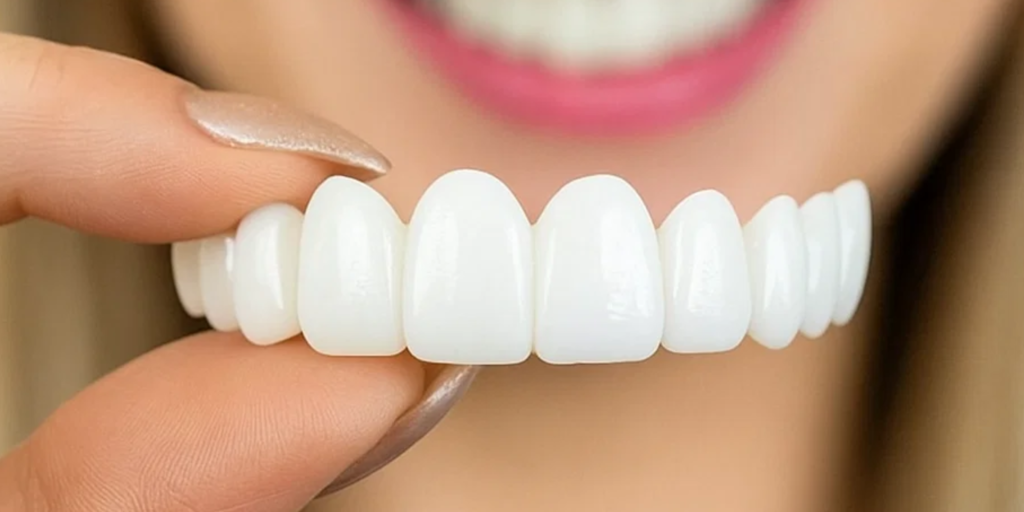
Removable veneers can be useful for people who want a temporary cosmetic change for an event, photographs, or a special occasion. However, they are not the same as professionally placed porcelain or composite veneers, and they should not be considered a replacement for restorative dental treatment. Dr. Georgia Haddad at Beach Cities Dental Group can help you determine whether a removable cosmetic option or a more permanent treatment better matches your dental needs and smile goals.
What Are Snap-On and Pop-On Veneers?
Snap-on and pop-on veneers are removable cosmetic appliances designed to fit over your natural teeth. They are sometimes called clip-on veneers, removable veneers, or temporary veneers.
Rather than bonding directly to the tooth, these appliances typically use their shape and fit to stay in position. Some are made from resin or thermoplastic materials, while custom versions may be manufactured using impressions or digital scans of the patient’s teeth.
The primary purpose is cosmetic. They can make teeth appear:
- Whiter
- More uniform
- Straighter
- More evenly shaped
- Less visibly stained
- Less noticeably chipped
- More consistent in appearance
Because they sit over the natural teeth, the underlying dental problems remain. For example, a removable veneer can cover the appearance of a gap, but it does not close the gap or correct the underlying bite.
How Do Removable Veneers Work?
The process depends on whether you choose a generic or custom-made product.
Generic Removable Veneers
Generic or over-the-counter products are designed to fit a wide range of mouths. They are usually less expensive and may be available without a dental appointment.
However, because they are not designed specifically for your teeth, the fit may be less predictable. A poor fit can affect comfort, speech, appearance, and everyday use.
Custom Snap-On Veneers
Custom removable veneers are created to match the shape and arrangement of your teeth. A provider may use dental impressions or digital scans to create an appliance that fits more closely.
A custom fit can provide a more natural appearance and better comfort than a generic product. However, even a well-made removable veneer remains a temporary cosmetic appliance rather than a permanent dental restoration.
What Is the Difference Between Snap-On and Traditional Veneers?
The biggest difference is how the veneer attaches to the tooth and whether the treatment permanently changes the tooth.
Traditional porcelain veneers are thin restorations that are bonded to prepared teeth. Depending on the treatment plan, some natural enamel may need to be removed before placement. Once enamel has been altered, the treatment is generally considered irreversible.
Snap-on veneers, on the other hand, are designed to be taken out. They generally require no permanent tooth preparation.
Here is a simple comparison:
| Feature | Snap-On/Pop-On Veneers | Traditional Porcelain Veneers |
| Removable | Yes | No |
| Tooth preparation | Usually none | May require enamel preparation |
| Treatment purpose | Temporary cosmetic coverage | Long-term cosmetic restoration |
| Custom options | Available | Yes |
| Permanence | Temporary | Long-term |
| Professional evaluation | Recommended | Required |
| Can correct underlying dental problems? | No | Limited; depends on condition |
| Appearance | Varies by material and fit | Generally more natural-looking |
| Maintenance | Remove and clean regularly | Maintain like natural teeth |
What Is the Snap-On Veneers Price?
The snap on veneers price can vary considerably depending on whether the appliance is generic or custom-made, the materials used, the provider, and the complexity of the design.
Lower-cost over-the-counter products may be considerably less expensive than custom-made removable appliances. Custom options generally cost more because they involve individualized measurements, impressions or scans, fabrication, and adjustments.
It is important not to judge a removable veneer solely by its initial price. A product that is inexpensive but uncomfortable, poorly fitted, or difficult to clean may not provide the result you expect.
A dental consultation can also help determine whether removable veneers are appropriate for your teeth before you spend money on a cosmetic appliance.
Can Snap-On Veneers Cover Missing Teeth?
This is one of the most important questions to discuss with a dental professional.
Some removable appliances are designed to replace the visible appearance of one or more missing teeth as part of the appliance. However, this does not mean they replace the tooth’s function or provide the same stability as a dental implant, bridge, or other restorative treatment.
If you have missing teeth, the right treatment depends on factors such as:
- Number of missing teeth
- Location of the missing teeth
- Gum health
- Bone support
- Bite alignment
- Overall oral health
- Your cosmetic and functional goals
Someone looking for the best veneers for missing teeth should first determine whether veneers are actually the appropriate treatment. Traditional veneers are generally placed on existing teeth, so they are not a direct replacement for missing teeth. A removable cosmetic appliance may conceal missing teeth temporarily, while restorative treatments can address the underlying loss of tooth structure.
Are Removable Veneers Safe?
Removable veneers may be appropriate for some people when they are properly designed, fitted, used as directed, and cleaned regularly. However, covering your teeth for extended periods without proper hygiene can contribute to plaque accumulation and oral health problems.
The appliance should be cleaned according to the manufacturer’s or dental professional’s instructions. Your natural teeth and gums also need regular brushing and flossing.
It is particularly important to have a dental examination if you have:
- Tooth decay
- Bleeding or swollen gums
- Loose teeth
- Significant tooth sensitivity
- Cracked teeth
- Untreated cavities
- Active gum disease
- Missing teeth
- Jaw or bite problems
A removable cosmetic cover should not be used to hide a dental problem that requires treatment.
Advantages of Snap-On and Pop-On Veneers
Removable veneers can offer several advantages for people seeking temporary cosmetic improvement.
No Permanent Tooth Alteration
One of the biggest advantages is that removable veneers generally do not require the tooth preparation associated with many traditional veneer procedures.
Temporary Cosmetic Improvement
They can provide a different smile appearance without committing to permanent cosmetic dentistry.
Convenient for Certain Occasions
Some people use removable veneers for weddings, professional photographs, social events, or other occasions when they want a temporary cosmetic change.
Multiple Cosmetic Concerns Can Be Covered
Depending on the design and fit, a removable appliance may make several visible teeth appear more uniform at the same time.
Limitations You Should Consider
Despite their cosmetic appeal, removable veneers have important limitations.
They may feel different from natural teeth and can take time to get used to. Speaking may also feel unusual initially. Eating while wearing them can be uncomfortable or impractical depending on the appliance.
They also do not repair cavities, strengthen damaged teeth, treat gum disease, correct an unhealthy bite, or replace the biological function of natural teeth.
The final appearance can also vary significantly depending on the material, color, thickness, and quality of the fit.
How to Care for Removable Veneers
Proper maintenance is essential.
Remove the appliance as directed and clean it regularly. Avoid using abrasive products unless specifically recommended, since they can damage the material. Store the appliance in an appropriate container when it is not being worn.
You should also continue your normal oral hygiene routine. Wearing a removable veneer does not eliminate the need to brush, floss, and maintain regular dental appointments.
If the appliance becomes cracked, warped, uncomfortable, or difficult to remove, stop using it and ask your dentist for guidance.
Are Removable Veneers Better Than Permanent Veneers?
There is no single option that is best for everyone.
Removable veneers may make sense when your priority is temporary cosmetic coverage without permanent tooth alteration. Permanent veneers may be more appropriate when you are looking for a professionally planned, long-term cosmetic restoration.
The decision should be based on your teeth, gums, bite, expectations, and overall oral health—not simply the appearance of an appliance or its cost.
A cosmetic dentist can evaluate your smile and explain alternatives before you make a decision.
When Should You See a Dentist?
A professional dental evaluation is particularly important if you are considering removable veneers because of missing, damaged, painful, or severely discolored teeth.
A dentist can determine whether the issue is purely cosmetic or whether treatment is needed first. For example, a tooth that appears uneven may have underlying decay or structural damage. Covering it with a cosmetic appliance without addressing the problem could allow the condition to worsen.
At Beach Cities Dental Group, discussing your smile goals with a dental professional can help you compare cosmetic and restorative options based on your individual situation.
Final Thoughts
Snap-on and pop-on veneers can provide a temporary way to change the appearance of your smile without permanently altering your natural teeth. They may be suitable for certain cosmetic situations, but they are not a substitute for professional treatment when you have decay, gum disease, damaged teeth, missing teeth, or bite problems.
Before purchasing removable veneers, consider the fit, material, maintenance requirements, expected appearance, and limitations. If you are unsure whether removable veneers, traditional veneers, implants, bridges, or another treatment is appropriate, a dental consultation can provide a clearer path forward.
Want to discuss your smile goals? Contact Beach Cities Dental Group to schedule a consultation and speak with a dental professional about cosmetic and restorative options that may suit your needs.
Frequently Asked Questions
1. Are snap-on veneers permanent?
No. Snap-on veneers are designed to be removable. They fit over the natural teeth and can be taken out when needed. They are different from traditional veneers, which are professionally bonded to prepared teeth.
2. Can you eat while wearing removable veneers?
Eating with removable veneers depends on the specific product and its design. Some appliances may not be intended for eating, while others may allow limited use. Always follow the manufacturer’s instructions or your dentist’s recommendations.
3. Are removable veneers good for missing teeth?
Removable veneers may temporarily cover the appearance of missing teeth in some cases, but they do not replace the function of a natural tooth. If you have missing teeth, ask a dentist about restorative options such as implants or bridges as well as temporary cosmetic solutions.
4. How much do snap-on veneers cost?
The cost varies based on the type of appliance, materials, customization, and provider. Generic options are typically less expensive than custom-made removable veneers. A dental consultation can help you compare the overall value and suitability of different options.
5. Can removable veneers replace traditional veneers?
Not in the same way. Removable veneers provide temporary cosmetic coverage, while traditional porcelain or composite veneers are designed as professionally placed restorations. The appropriate choice depends on your oral health, cosmetic goals, and treatment expectations.