

Many people hear a clicking sound when they chew or yawn. Most of them just ignore it. But if it happens regularly, it might be something serious that needs your attention. It is one of the early signs of TMJ disorder. It is not always something serious. But it can be a sign that your jaw needs a thorough check-up. Catching a dental problem early makes a real difference.
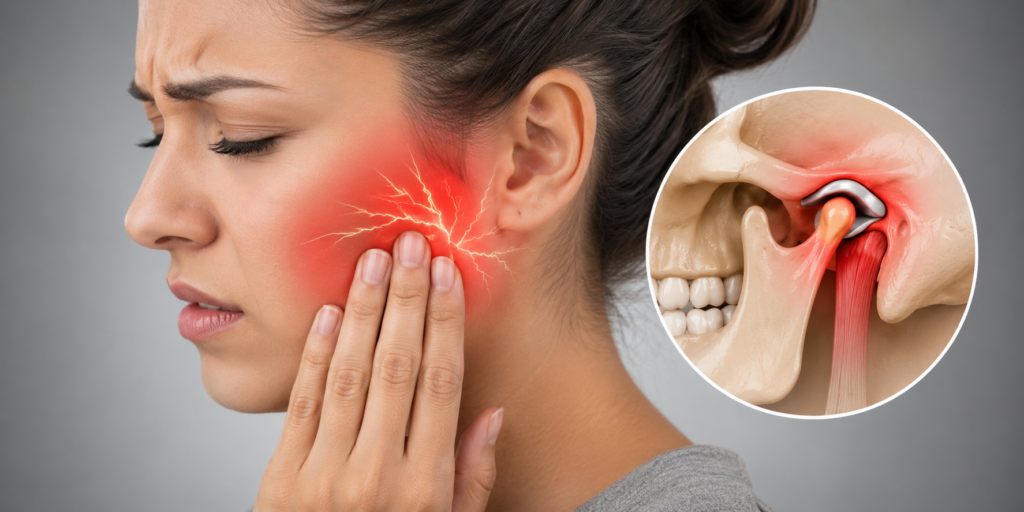
What Is TMJ?
TMJ or temporomandibular joint, is present in your jawbone. It connects the jawbone to your skull. This joint works constantly. Whenever you talk, chew or yawn, it moves. TMJ disorder is also called TMD. It is a dental conditions related to joint and muscles. That clicking sound? It’s usually the disc inside the joint slipping out of place as your jaw moves.
Common Culprits
There’s rarely one single cause for TMD.
Teeth grinding and clenching
Many people experience it at night. They often don’t realize it until someone tells them.
Stress
Tension gets stored in the jaw. People clench while working, driving or even sleeping.
Bite misalignment
Due to misaligned teeth, your jaw has to compensate. There is constant adjustment stress on the joint.
Old injuries
Injuries to the jaw, head or neck can be the reasons for jaw joint problems. These can happen years after the injury.
Arthritis
It is a joint disorder. It cause clicking, stiffness and pain.
Hypermobility
Naturally looser joints make you more TMJ prone.
Symptoms of TMJ dysfunction – TMJ Warning Signs to Watch For
Clicking is an easily noticeable sign. It can be serious when paired with these TMJ pain symptoms:
Clicking or popping
Do you hear such a sound when you try to open or close your mouth? It can be one of the clicking jaw symptoms.
Jaw pain or tenderness
Pain around the joint, in front of the ear or along the side of the face is another symptom.
Trouble opening your mouth
If your jaw feels stiff, the joint may be inflamed.
Locking
Many people experience a jaw locked open or closed.
Headaches
Headache around the temples is one of the symptoms of TMJ dysfunction.
Ear symptoms
Pain or ringing in the ear is a clear TMJ symptom.
Neck and shoulder pain
Jaw muscles connect to the neck. Tension in the jaw radiates toward the neck or shoulder.
Facial fatigue
If your jaw feels tired after eating or talking, it means the muscles are working harder.
Changes in your bite
You will experience changes when you close your mouth.
These are some early signs of TMJ disorder you can recognize at home. The next step should be visiting a dentist.
When to Seek Treatment
See a specialist if:
- The clicking is getting louder or more frequent
- You have pain — even mild — around the jaw
- You’re waking up with headaches or a sore jaw
- Your jaw has ever locked or felt stuck
- Eating has become uncomfortable
- You’re having ear symptoms with no obvious cause
- Symptoms have been going on for more than a few weeks
TMJ disorder takes more time to evaluate. Dr. Georgia Haddad, a dental expert, has been serving at Beach Cities Dental Group for years. Their team has helped many patients with unique TMJ pain symptoms. They evaluate patients with symptoms of TMJ or other dental concerns. The staff here follows a thorough, patient-focused approach.
Nonsurgical Management Options
In most cases, TMJ is treated without surgery. Several treatment options are recommended by dental experts. The majority of patients get relief from these treatments. Some patients are recommended night guards. These are custom-fitted devices that patients have to wear during sleep. They prevent grinding during sleep. They help to take pressure off the joint. Thus, your jaw muscles can relax.
Another treatment method is physical therapy. It focuses on the jaw and neck muscles. It involves stretches, manual therapy and posture work. This reduces tension in muscles. Gradually, your joint movements are improved.
To some patients, anti-inflammatory medication is prescribed. It helps manage pain. When TMD is due to stress, stress management is suggested. It helps reduce unconscious clenching. The patient is helped with relaxation techniques. Soft food diet is recommended to such patients. Hard, crunchy or chewy foods can put extra pressure on the jaw. Thus, patients are advised to eat soft foods until things settle down.
Botox injections into the jaw muscles are becoming more popular for TMJ. They relax the muscle and reduce grinding. They can provide relief for several months.
Conclusion:
Experiencing jaw clicking? It may be related to TMJ disorder or TMD. It is related to muscles and can be paired with many other symptoms. The best way to diagnose the issue is to reach a reliable dentist.
Dr. Georgia Haddad at Beach Cities Dental Group specializes in nonsurgical TMJ management. Whether that’s a night guard, a combination of therapies, or a referral when needed — the focus is always on what’s right for the individual patient.
FAQs
1. Can my jaw clicking be a serious issue?
Occasional jaw clicking during chewing is fine. But if you feel pain and it is getting louder, you should get it checked.
2. What are the early signs of a jaw tumor?
Jaw tumors are rare. Early signs can be swelling or a lump in the jaw, tooth loosening, numbness, difficulty chewing and persistent pain.
3. How do I know if my TMJ is serious?
If your jaw locks, pain is affecting your sleep or eating, or symptoms have lasted more than a few weeks — that’s serious. Dr. Georgia Haddad at Beach Cities Dental Group can assess your condition and suggest the best treatment.
4. Is TMJ linked to arthritis?
Yes. Both osteoarthritis and rheumatoid arthritis can affect the joint. If you have arthritis, get yourself evaluated for jaw joint problems.
5. Can TMJ clicking go away on its own?
Sometimes — especially if it’s stress-related or temporary. Rest, reduced stress, and softer foods can help mild cases. But clicking that persists or comes with other clicking jaw symptoms usually needs some form of treatment to resolve.