

The most common dental problems include tooth decay, gum disease, tooth sensitivity, cracked or damaged teeth, and teeth grinding. Treatment depends on the cause and severity and may include professional cleanings, fluoride treatments, fillings, crowns, periodontal treatment, or custom night guards.
Dental problems can affect people of all ages and may begin with small changes that are easy to overlook. Understanding common dental problems, oral bacteria, and the importance of regular preventive care can help you recognize potential concerns early and protect your smile.

Why Do Dental Problems Develop?
Dental problems can develop when mouth bacteria feed on sugars and starches left behind by food and produce acids that attack tooth enamel. This process contributes to plaque buildup, and without proper oral care, plaque can increase the risk of tooth decay and gum problems.
Main Causes of Teeth Issues:
- Plaque and Bacteria: Bacteria combine with food particles to form a sticky film called plaque. The acids produced by these bacteria can weaken tooth enamel.
- Sugary Diets: Frequent consumption of sweets and starches gives bacteria more fuel to produce acids, which can contribute to tooth decay.
- Poor Oral Hygiene: Infrequent brushing and flossing allow plaque to build up. Over time, hardened plaque, known as tartar, can contribute to gum problems.
- Dry Mouth: Reduced saliva flow makes it harder for the mouth to wash away food particles and neutralize acids, increasing the risk of cavities.
- Physical Stress: Teeth grinding, jaw clenching, or dental injuries can cause teeth to become worn, cracked, chipped, or weakened.
- Genetics and Health Factors: Genetics, certain health conditions, medications, and other individual factors may increase a person’s susceptibility to tooth decay and other dental problems.
Regular brushing, daily flossing, a balanced diet, good hydration, and routine dental checkups can help reduce the risk of common teeth issues and support long-term oral health.
How Can You Prevent Common Dental Problems?
Preventing common dental problems starts with consistent oral hygiene and healthy daily habits. Brush twice a day with fluoride toothpaste, clean between your teeth daily, limit sugary foods and drinks, drink water regularly, and maintain routine dental checkups. These simple steps can help reduce the risk of cavities, gum disease, and other teeth issues.
Daily Oral Hygiene Habits
- Brush twice a day: Brush for about two minutes using a soft-bristled toothbrush and fluoride toothpaste. Make sure you gently clean all tooth surfaces and along the gumline.
- Clean between your teeth daily: Floss or use another appropriate interdental cleaner to remove plaque and food particles from areas your toothbrush cannot reach.
- Use mouthwash when appropriate: An antimicrobial or fluoride mouthwash may provide additional oral-health benefits when recommended for your individual needs.
- Clean your tongue: Gently cleaning your tongue can remove accumulated bacteria and help maintain fresher breath.
Make Healthy Diet Choices
- Limit sugary foods and drinks: Frequent exposure to sugar can give cavity-causing bacteria more fuel to produce acids that weaken tooth enamel.
- Drink plenty of water: Water helps rinse away food particles and supports normal saliva production, which plays an important role in protecting your teeth.
- Choose a balanced diet: Include nutritious foods such as vegetables, fruits, dairy products, lean proteins, and other foods that support overall oral and general health.
Follow Protective Lifestyle Habits
- Schedule regular dental visits: Routine examinations allow your dentist to identify early signs of cavities, gum disease, enamel wear, and other dental problems before they become more complicated.
- Protect your teeth during sports: A properly fitted mouthguard can help reduce the risk of chipped, cracked, or knocked-out teeth during contact or high-impact activities.
- Avoid tobacco products: Smoking and tobacco use can increase the risk of gum disease and other oral health problems while also contributing to tooth staining.
Remember: Good dental care is not just about treating problems after they appear. Consistent prevention, professional care, and early attention to changes in your teeth and gums can help you maintain a healthier smile for years to come.
Medically Reviewed By: Dr. Georgia Haddad
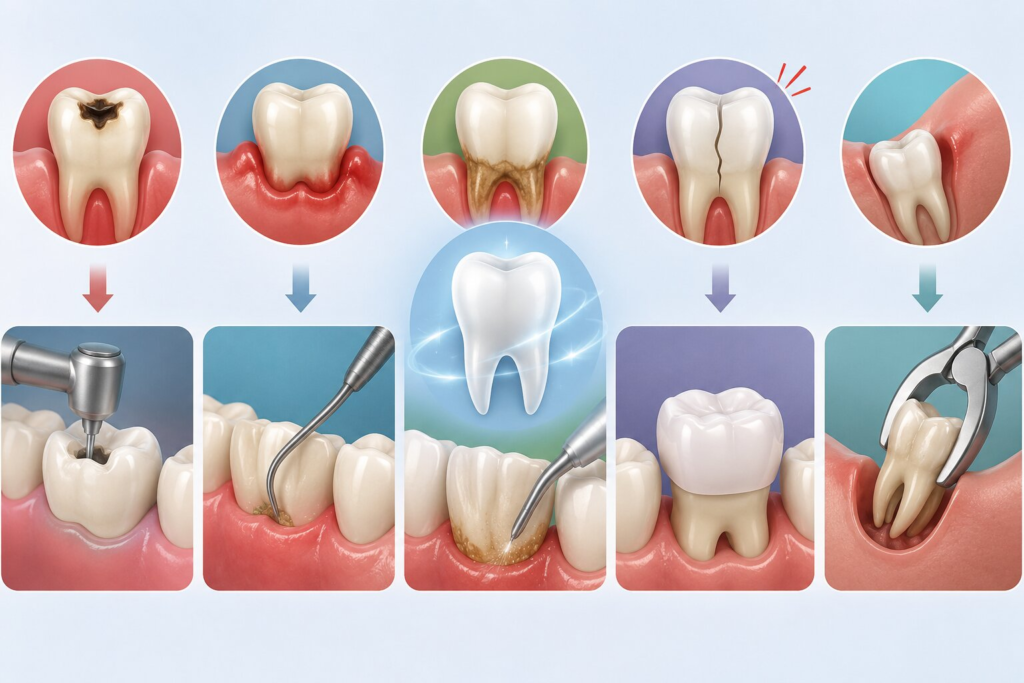
How Are Common Dental Problems Treated?
Treatment for common dental problems depends on the condition, its cause, and how severe it is. Cavities may require fillings, gum disease may require professional cleanings or periodontal treatment, tooth sensitivity may require desensitizing care, cracked teeth may need bonding or crowns, and teeth grinding may be managed with a custom night guard.
Tooth Decay
Treatment for tooth decay depends on how much the tooth has been affected. Early enamel changes may benefit from preventive care and fluoride, while cavities may require dental fillings. More advanced decay may require additional restorative treatment.
Gum Disease
Early gum disease may be managed with improved brushing and flossing, professional dental cleanings, and better plaque control. More advanced gum disease may require specialized periodontal treatment to protect the gums and supporting structures around the teeth.
Tooth Sensitivity
Treatment for tooth sensitivity depends on its underlying cause. A dentist may recommend desensitizing toothpaste, fluoride treatments, or restorative care. If sensitivity is caused by decay, gum recession, enamel damage, or a cracked tooth, treating the underlying problem is important.
Cracked or Damaged Teeth
The appropriate treatment for a cracked tooth depends on the location and severity of the damage. Minor chips may sometimes be repaired with dental bonding, while more significant damage may require a dental crown or another restorative procedure.
Teeth Grinding
Teeth grinding can gradually wear down enamel and damage teeth. A dentist may recommend a custom night guard to protect the teeth during sleep, along with strategies to address contributing factors such as jaw clenching or stress. Some people also explore supplements for teeth grinding as a supportive approach to managing bruxism, although supplements should not replace professional dental care.
Missing Teeth
Missing teeth can affect chewing, speech, and the alignment of surrounding teeth. Depending on your oral health and individual needs, replacement options may include dental implants, bridges, or dentures.
When Should You See a Dentist?
You should see a dentist promptly if you have severe tooth pain, swollen or bleeding gums, a broken tooth, or signs of infection. Do not wait for a routine appointment when symptoms are persistent or worsening, especially when pain is accompanied by swelling or fever.
Urgent Signs You Should See a Dentist
- Severe Toothache: Throbbing, sharp, or persistent tooth pain that does not improve should be evaluated to identify the underlying cause.
- Bleeding or Swollen Gums: Frequent bleeding, tenderness, or swelling may indicate an underlying gum health concern.
- Facial or Gum Swelling: Swelling around the gums, jaw, or face can sometimes indicate an infection and should be assessed promptly.
- Broken or Damaged Dental Work: A cracked tooth, loose crown, lost filling, or damaged restoration may require timely treatment to prevent further damage.
- Persistent Bad Breath: Ongoing bad breath or a persistent unpleasant taste despite good oral hygiene may indicate an underlying dental problem.
- Tooth Sensitivity: Sharp or recurring sensitivity to hot, cold, or sweet foods can have several causes, including decay, enamel wear, or exposed tooth surfaces.
When to Schedule Routine Dental Visits
- Adults: Schedule routine dental examinations based on your individual oral health needs and your dentist’s recommendations.
- Higher-Risk Patients: People with active gum disease, frequent cavities, or other risk factors may need more frequent dental visits.
- Children: Children should have their first dental visit by their first birthday or within six months after their first tooth appears.
Personalized Dental Care at Beach Cities Dental Group
If you are experiencing ongoing tooth pain, sensitivity, gum problems, teeth grinding, or other oral health concerns, Beach Cities Dental Group can evaluate the underlying cause and discuss appropriate treatment options based on your individual needs. The team provides personalized dental care designed to identify problems early and help patients maintain healthy, functional smiles.
Have a dental concern? Visit our Beach Cities Dental Group’s dental office in Oxnard today and schedule your appointment.
Frequently Asked Questions
What happens when you don’t clean your teeth?
When you do not brush your teeth, food particles and bacteria build up and form plaque. Over time, plaque can produce acids that weaken tooth enamel, irritate your gums, and cause bad breath, cavities, and gum disease. If left untreated for a long time, severe gum disease can eventually lead to tooth loss.
What do healthy teeth look like?
Healthy teeth are naturally white, or they are off-white or yellowish and usually have a smooth, clean look. There should be no obvious cavities, cracks or major stains, and the gums around them should look firm, healthy and light pink with no regular bleeding.
Can your teeth get soft?
Teeth do not literally become soft, but tooth enamel can become weakened or demineralized. Acids from plaque, frequent acidic foods and drinks, and tooth decay can remove minerals from enamel. If you notice changes in your teeth, sensitivity, or visible damage, a dental examination can help identify the cause.
How to make my teeth look better?
Improve your daily hygiene (brush twice a day and floss), cut down on foods and drinks that stain (like coffee or tea), and if you want more dramatic changes, consider professional treatments (like teeth whitening, clear aligners, or veneers) to improve the appearance of your teeth.
Can dental problems cause headaches?
Some dental problems may contribute to headaches, particularly conditions involving tooth pain, jaw tension, or teeth grinding. However, headaches have many possible causes, so persistent or severe headaches should be evaluated by an appropriate healthcare professional.
What are the 5 most common dental problems?
The five most common dental problems are tooth decay, gum disease, tooth sensitivity, cracked or damaged teeth, and teeth grinding. Treatment depends on the underlying cause and severity and may include professional cleanings, fillings, fluoride treatments, crowns, periodontal treatment, or custom night guards.
What Are Pitted Teeth?
Pitted teeth have small depressions, grooves, or indentations on their surface. They can have different causes, including enamel development problems, enamel wear, or tooth decay. A dentist can examine the tooth to determine the cause and whether treatment is necessary.