

Medically reviewed by Dr. Tapia
Yes, a dentist can extract a tooth that is infected. The harder question is timing: pull it today, or treat the infection first. Practices don’t all handle that the same way, and the reasons matter when you’re the one in the chair with a swollen jaw.
Go to an emergency room now if your face or neck is swelling, you have a fever, swallowing is difficult, or breathing feels tight. Don’t wait for a dental appointment.
Can You Extract a Tooth That Is Infected?
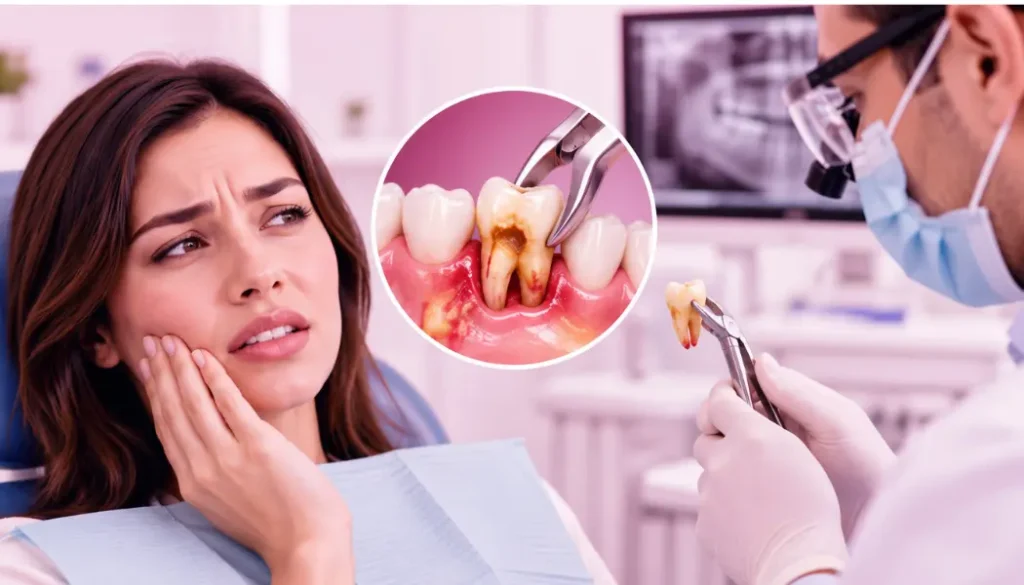
Yes. A dentist can extract an infected tooth, and removing it eliminates the source of the infection. Sometimes the dentist will first drain an abscess or start antibiotics to control the spread. Antibiotics alone rarely cure a tooth infection, so the tooth still needs treatment, either extraction or a root canal.
Here’s why. The bacteria live inside the tooth and around the tip of its root, a spot your blood doesn’t reach well once the nerve has died. Antibiotics can calm the surrounding infection and buy time. They can’t clean out the tooth.
You take the course, the swelling drops, the pain fades, and you decide you’re fine. Three weeks later it’s back.
Pull It Now or Treat the Infection First?
Two people can walk in with the same throbbing tooth and leave with different plans. That’s normal.
When a dentist extracts the same day
The simple case looks like this: the infection is limited to one tooth, you’re otherwise healthy, nothing is spreading, and the dentist can get the area numb. In that situation many dentists extract right away.
There’s some research behind it. A small prospective study of 82 patients compared 35 acutely infected teeth with 47 symptom-free ones. The two groups showed no significant difference in dry socket, the amount of anesthetic used or how long the extraction took. The authors concluded that antibiotics shouldn’t be used to postpone extraction.
Two limits. It’s one small study, and none of its patients had fever, fatigue or other whole-body symptoms. Treat it as a data point, not a rule.
When the dentist drains, medicates or waits
Some cases call for a different order. Swelling that’s spreading into the face or under the jaw, a fever, trouble opening your mouth, a health condition that affects healing, or an area that won’t numb can all change the plan. Inflamed tissue can be harder to numb, which is one reason a dentist sometimes treats the infection before extracting.
In those cases the dentist may drain an abscess and start antibiotics, or send you to an oral surgeon or a hospital. The antibiotics control the spread. They don’t replace removing the source, so the tooth still gets treated afterward. The sequence changes. The destination doesn’t.
Can the Tooth Be Saved Instead?
Sometimes. A root canal removes the infected tissue from inside the tooth and leaves the tooth in place. Four things decide whether that’s realistic:
- There’s enough healthy tooth above the gum line to rebuild.
- The bone around the root is still solid.
- No crack runs down the root. A vertical root fracture usually ends the discussion.
- The canals can be cleaned, which gets harder if an earlier root canal on the same tooth has already failed.
If all four check out, a root canal in Oxnard is worth discussing. Our full root canal guide walks through the procedure. A tooth that has snapped at the gum line is a different problem, and our post on whether a tooth broken at the gum line can be saved covers it.
We lean toward saving a tooth when it can be saved predictably. A root canal on a tooth that’s likely to crack again just postpones the extraction.
What Happens When You Extract a Tooth That Is Infected
1. Exam and X-ray. The dentist checks the tooth and surrounding bone for signs that the infection is spreading.
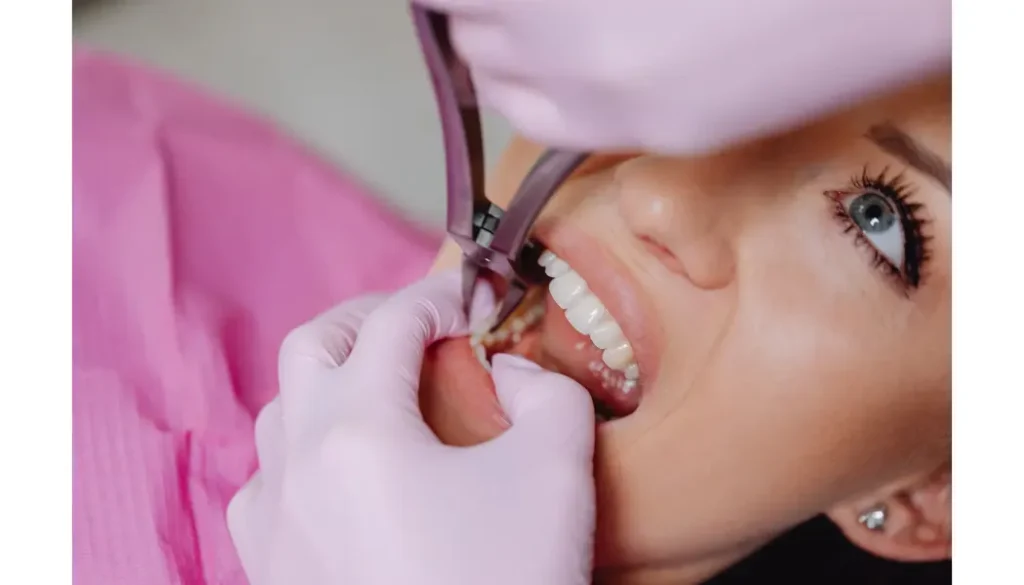
2. Removal. The dentist loosens and removes the tooth. If it is broken or has curved roots, a small cut in the gum may be needed to remove it in pieces.
3. Cleaning the socket. The dentist removes infected tissue, drains any pus and rinses the area. A blood clot forms to protect the bone underneath.
Once you’re numb you should feel pressure and movement, not sharp pain. Say so right away if that changes.
General Dentist or Oral Surgeon?
A general dentist handles many extractions, including infected ones, when the tooth is intact and the case is straightforward. An oral surgeon makes more sense when:
- The tooth is impacted or broken below the gum line.
- The roots are curved or fused to the bone.
- A medical condition, such as a bleeding disorder or heart condition, calls for extra monitoring.
- The infection has spread into the face or neck.
Aftercare After an Infected Tooth Extraction
Most instructions match any extraction, and our tooth extraction aftercare tips cover the basics. A few points matter more when the tooth was infected:
- Take any antibiotics exactly as prescribed.
- Protect the clot. Skip straws, smoking and hard rinsing for the first few days.
- Eat soft foods and brush gently away from the site.
- Watch the swelling. It should start easing after the first couple of days, not grow.
Pain that gets worse a few days in can be dry socket. Fever, spreading swelling or pus points to infection. Call us either way. Our post on dry socket after extraction explains the difference.
Warning Signs That Need Urgent Care
Go to an emergency room if:
- Your face or neck is swelling.
- You have a fever.
- Swallowing is difficult.
- Breathing feels tight.
Call your dentist the same day if:
- You see pus or notice a bad taste.
- A pimple-like bump appears on the gum.
- Swelling gets worse after an extraction.
- Pain is rising instead of fading.
Warm salt water and a cold compress can take the edge off while you wait. They don’t treat the infection. Putting off the appointment because you feel a bit better is how a manageable problem becomes an emergency. If you’re not sure which list you’re on, call our office for emergency dentistry guidance.
Replacing the Tooth After Extraction
A gap doesn’t stay quiet. Neighboring teeth drift toward it, the tooth above or below can shift, and the bone under the gap shrinks over time.
The usual options are an implant, a fixed bridge and a partial denture. Timing depends on how much infection and bone loss there was, so your dentist decides when to start. Our page on dental implants in Oxnard covers that option in detail.
Don’t let the replacement decision rush the extraction. Treat the infection first, then plan the replacement.
Frequently asked questions
Will a dentist pull an infected tooth the same day?
Often, yes, when the infection is limited to one tooth and you’re otherwise healthy. If swelling is spreading, you have a fever or the area won’t numb, the dentist may drain the abscess or start antibiotics first and extract later.
Will pulling an infected tooth stop the infection?
Removing the tooth removes the source, and your body can clear what’s left. Your dentist may also prescribe antibiotics, mainly when the infection has spread or a health condition slows healing.
Can antibiotics alone fix an infected tooth?
Rarely. They can ease symptoms, but the infected tissue is still inside the tooth. Without an extraction or a root canal, the infection usually returns.
Can a general dentist extract an infected tooth?
Yes, in straightforward cases. Impacted teeth, teeth broken below the gum line, complicated roots and some medical conditions usually point to an oral surgeon.
Can I get an extraction if my face is swollen?
Swelling doesn’t always rule it out, but it changes the plan. Swelling that’s spreading, along with a fever or trouble swallowing or breathing, means an emergency room visit first.